
Is it possible to improve the results of a previous otoplasty?
Patients who have already undergone otoplasty surgery in other centers and who are not satisfied with the results obtained increasingly come to our consultation.
Dr. Joaquim Suñol, a plastic surgeon specializing in secondary surgery, can evaluate your case to advise you if a SECONDARY OTOPLASTY is viable.
Dr. Suñol’s Advice
It is essential that the surgeon who operates otoplasties dedicates the necessary time to planning and preparing the intervention and selects the appropriate surgical method for each diagnosis. Attention to detail is the key to achieving a good result.
Poorly done otoplasty
The results obtained in cosmetic ear surgery are permanent.
The shape, position and size of an ear do not usually change after having been operated on, if the appropriate techniques have been used…
Sometimes, the appearance of post-operative complications can cause the otoplasty to have a poor outcome for the patient and they continue to seek an improvement in the appearance of their ears.
The normal scarring caused after a first ear operation makes re-operating with secondary surgery more difficult, since the tissues in the area are not as elastic as before and are more friable and resistant to being folded or changing shape. .
Frequently, the surgical technique used by the first surgeon can be difficult to recognize from the “outside” with the naked eye: the alterations caused in the cartilage of the ear, the location and exact number of the permanent sutures that had been placed, the cartilage grafts performed, etc.
Avoid problems by consulting an otoplasty specialist
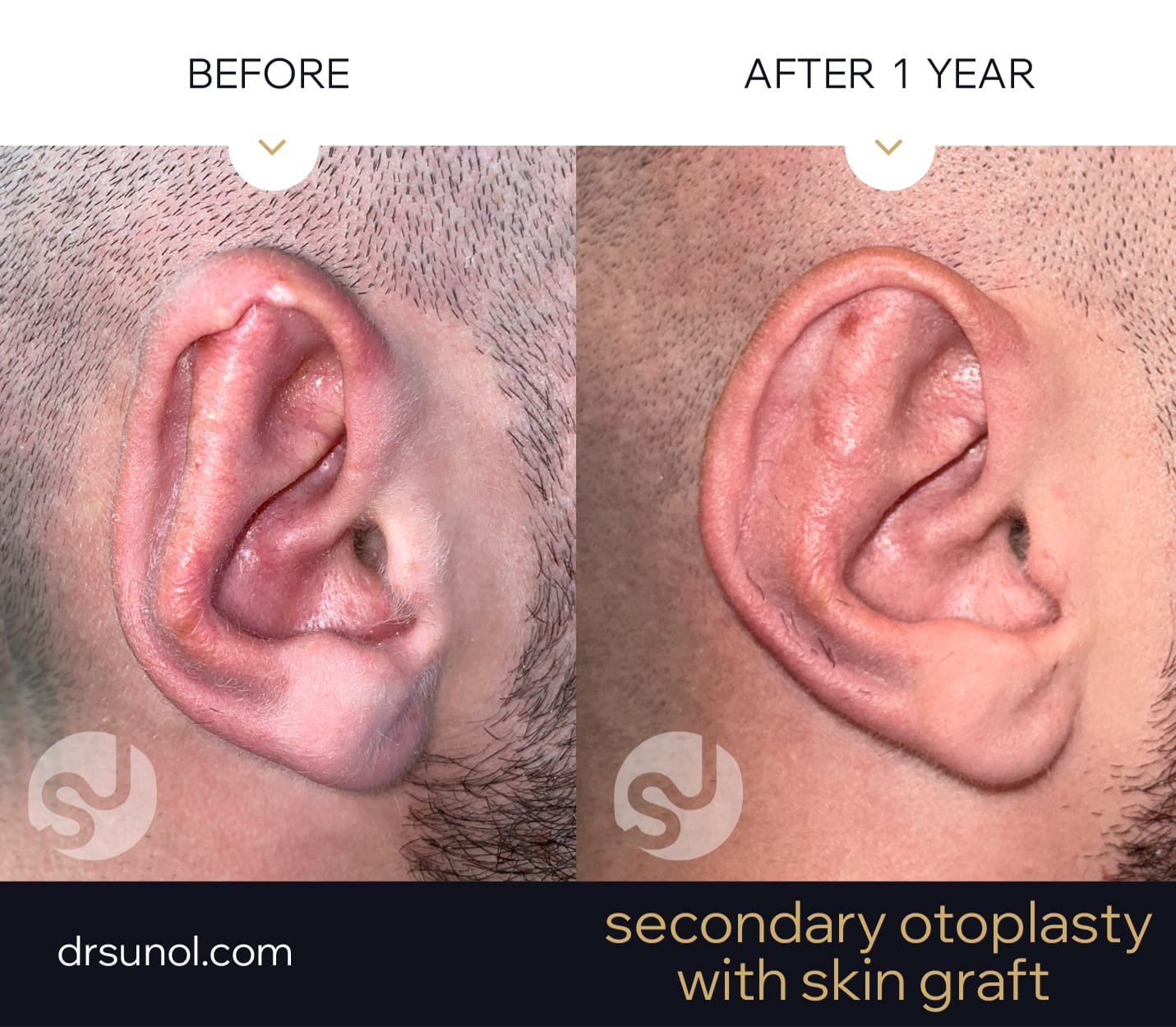
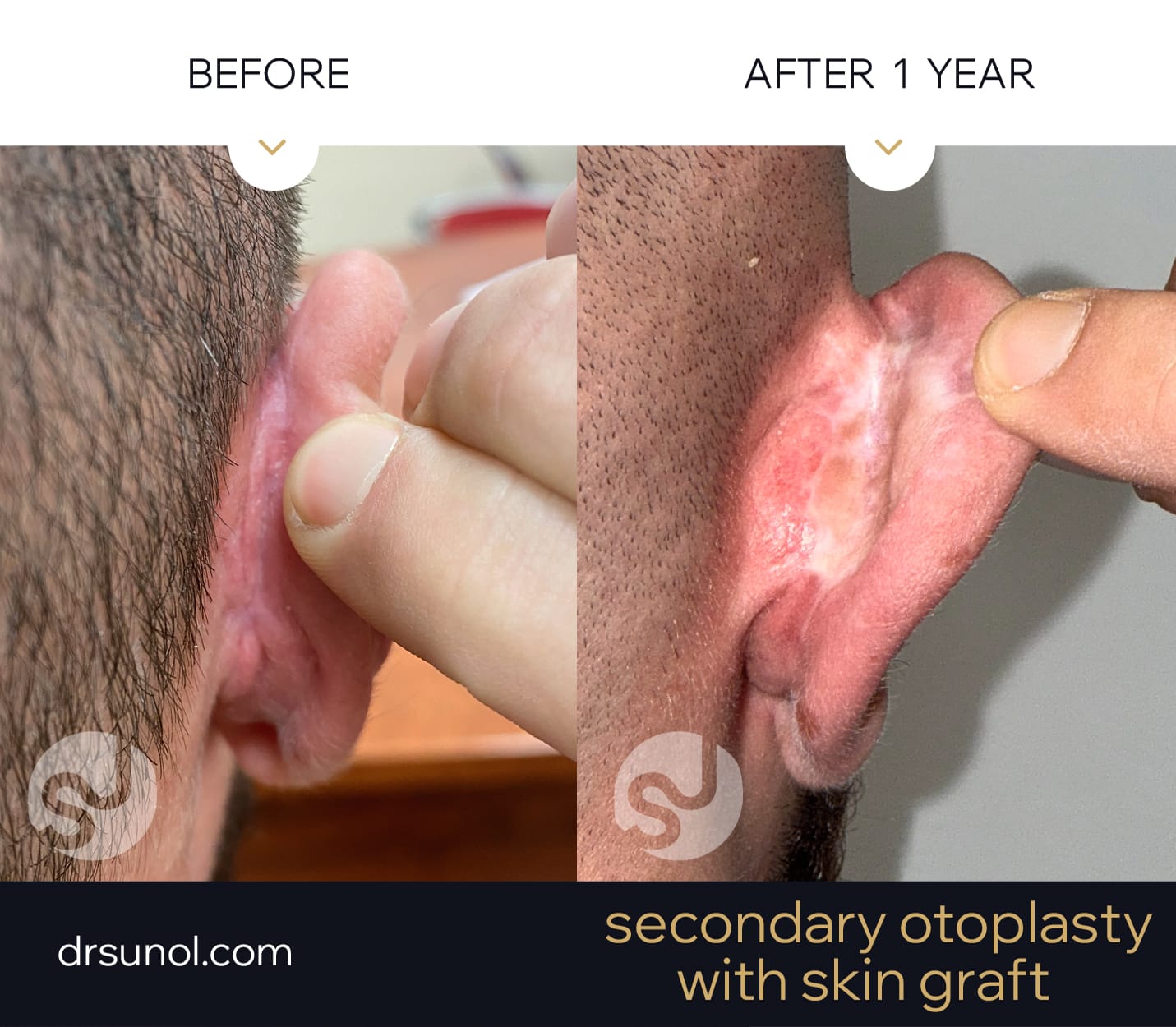
Some plastic surgeons who are not used to performing reconstructive Otoplasties on separated ears proceed incorrectly by removing excess skin from the area behind the ear, mistakenly believing that there will be excess skin when the ear is positioned closer to the head. Due to this incorrect maneuver, by closing the incision by suturing it under tension due to the lack of skin, what they achieve is that the ear becomes deformed and the cartilage and folds become bent excessively. As a consequence of this, there are cases that can only be solved with a Secondary Otoplasty that will try to correct the deformity by using skin grafts.
Secondary Otoplasty
The surgical approach of secondary otoplasty is similar to that of primary otoplasty, but with even greater caution and preventing all possible factors that may have influenced during the first intervention.
It is during the course of the secondary surgery when it will be possible to visualize and discover exactly what the alterations are in the cartilage of the ear and also the exact number and position of all the sutures that were placed in the first operation and that could have caused the malposition of the ear cartilage or its folds in an unwanted unnatural way.
The skill of the surgeon is the key to restoring the naturalness of the components of the ear and obtaining the desired result, which should always be as natural a result as possible (not showing that it has been operated on).
The shape and consistency of an ear depends directly on the shape of the cartilaginous skeleton that forms it.
- Cartilage are avascular (it does not have blood vessels that supply it with oxygenated arterial blood and nourish it) and receive nutrients and oxygen by imbibition (it is the diffusion of substances from capillaries in the perichondrium through the intercellular space). The perichondrium is a layer of dense connective tissue surrounding all hyaline cartilages.
- Therefore, accidents or direct trauma to the ears (operated or not) can cause a hematoma (which in the ear is often called a “cauliflower hematoma”) that can interrupt the contact of the cartilage with the skin that nourishes it due to inhibition, on both sides (anterior and posterior). This can cause necrosis and loss of the auricular cartilage, with the consequent alteration of the shape of the ear.
Dr. Suñol’s Advice
In the vast majority of cases, a person’s two ears tend to be different from each other (a little or a lot) and may be implanted at different heights. Ear plastic surgery seeks to normalize, regularize and also symmetrize the two ears as much as possible and obtain natural results. Because the ears usually have an unequal shape and size, although the results obtained after an otoplasty can be excellent, it is possible to still perceive that the ears have been a little different from each other. Therefore, if a patient who is considering otoplasty surgery seeks total symmetry and absolute perfection as the only possible result, he should not undergo surgery.
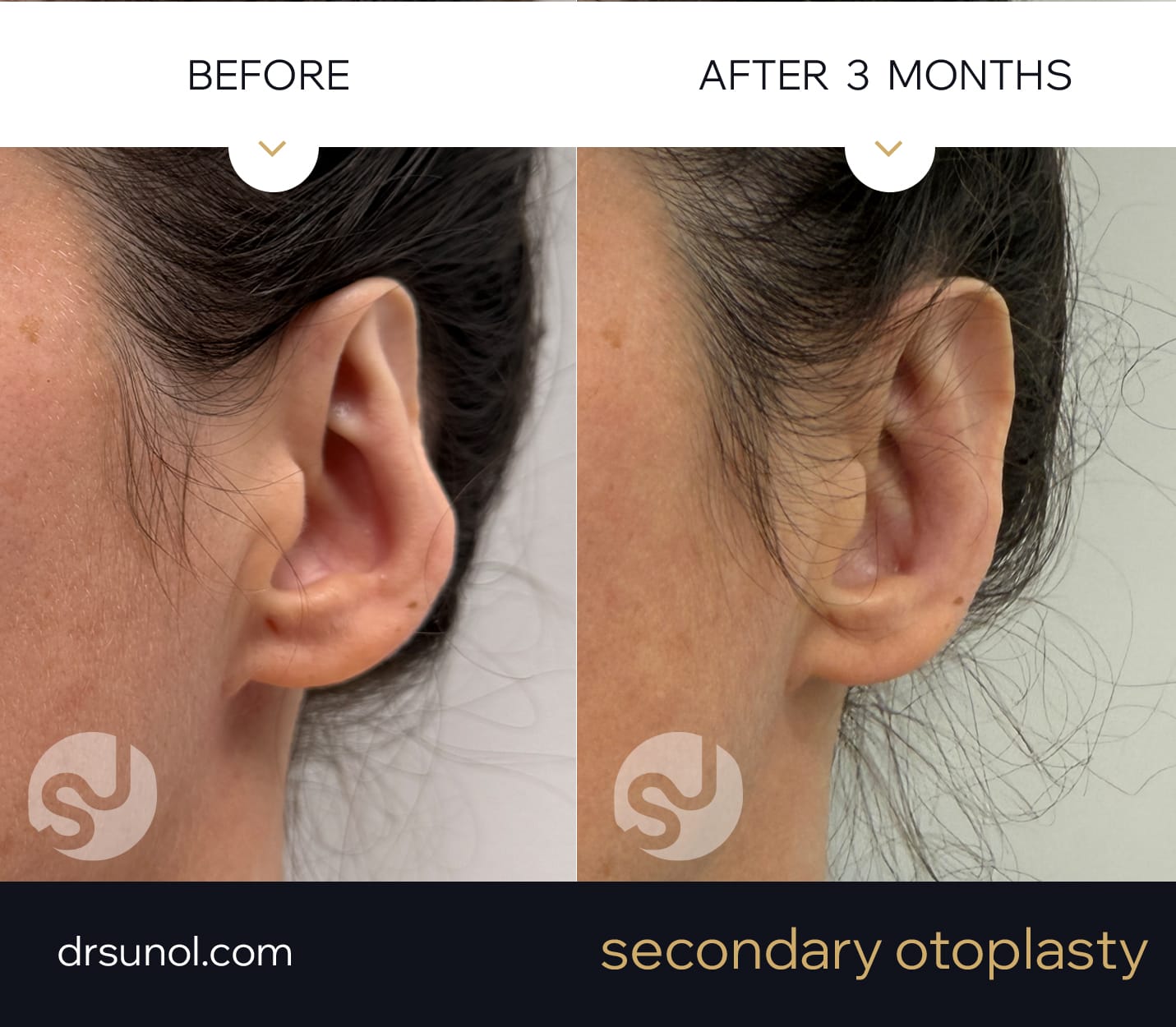
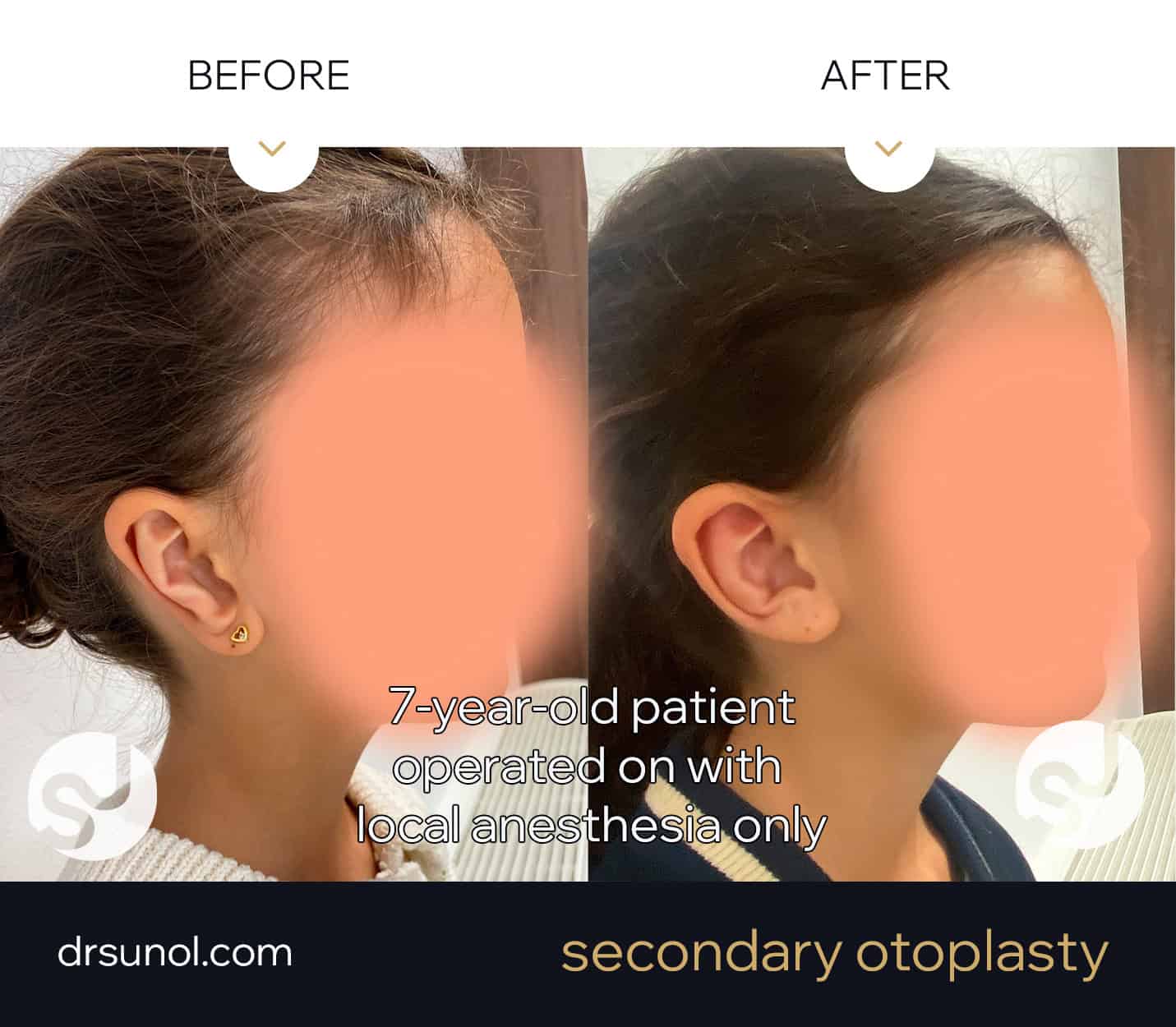
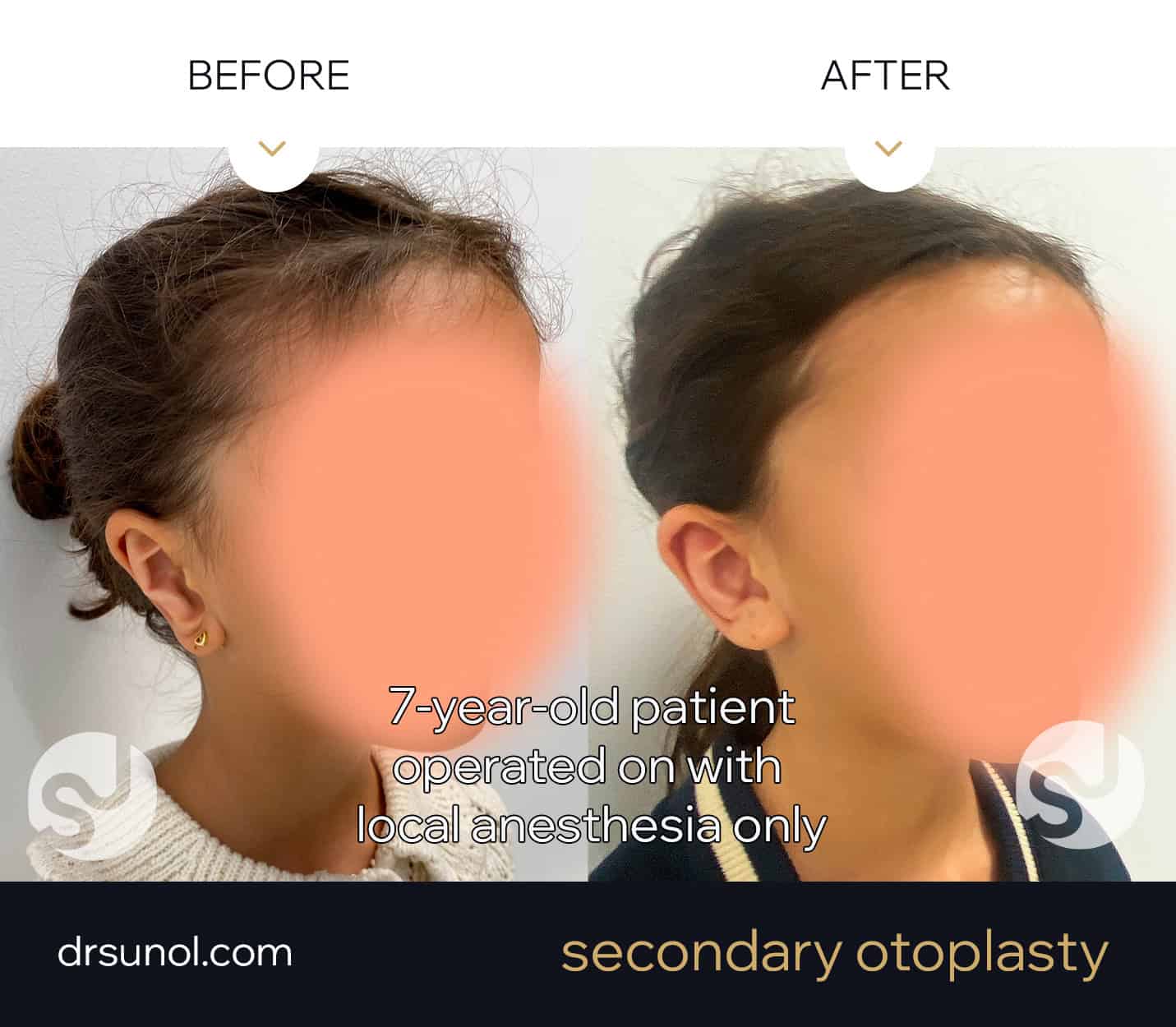
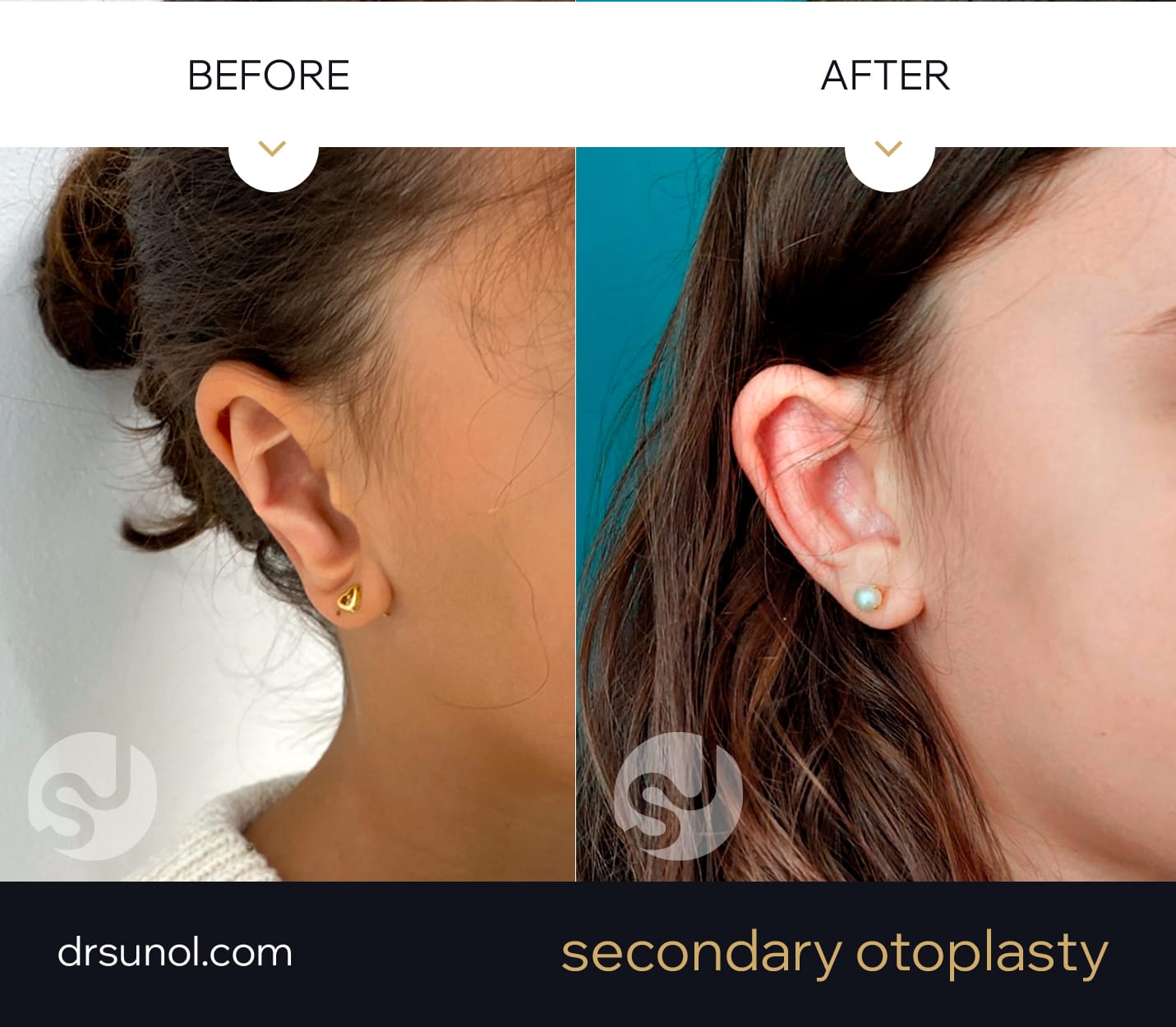
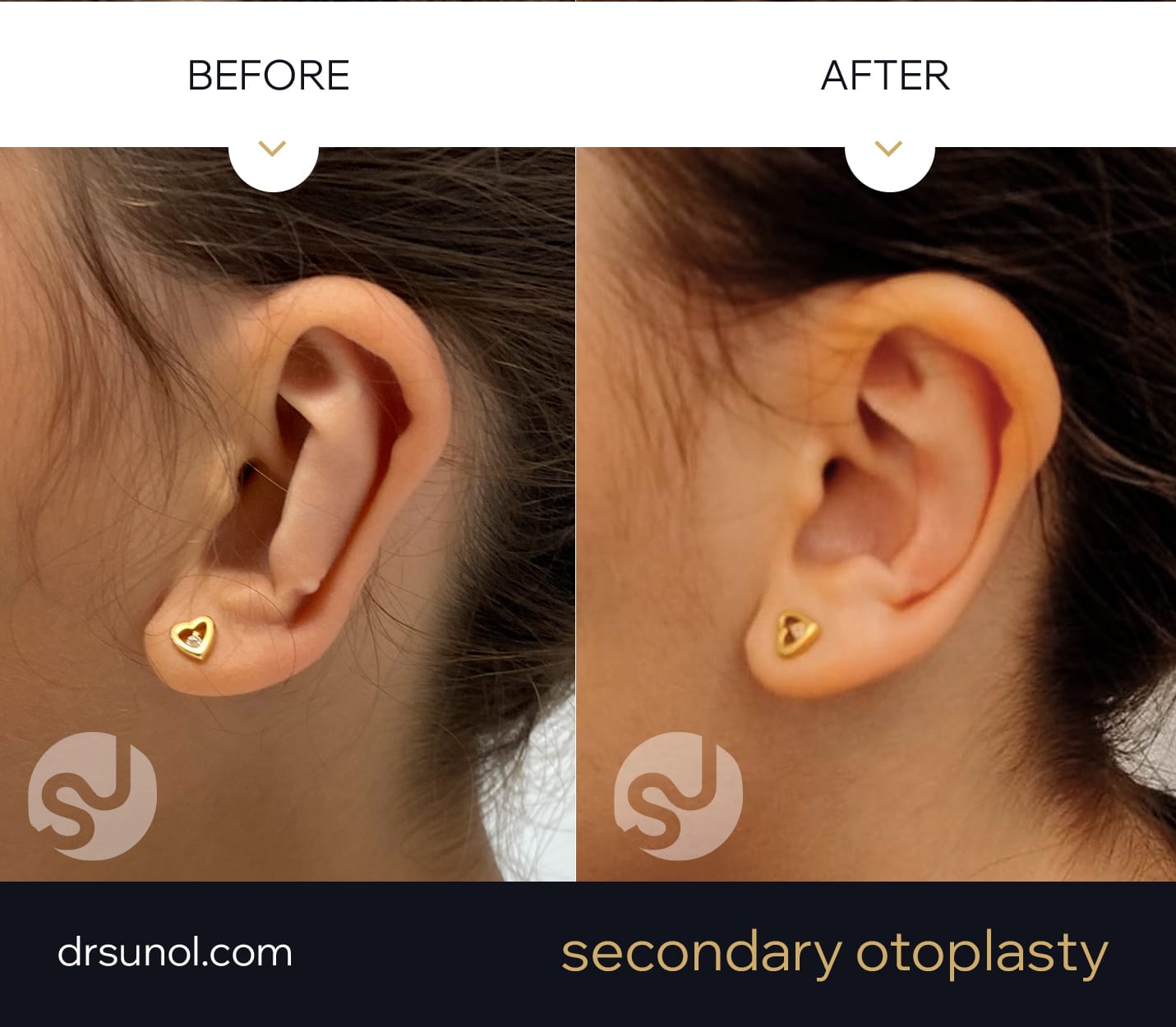
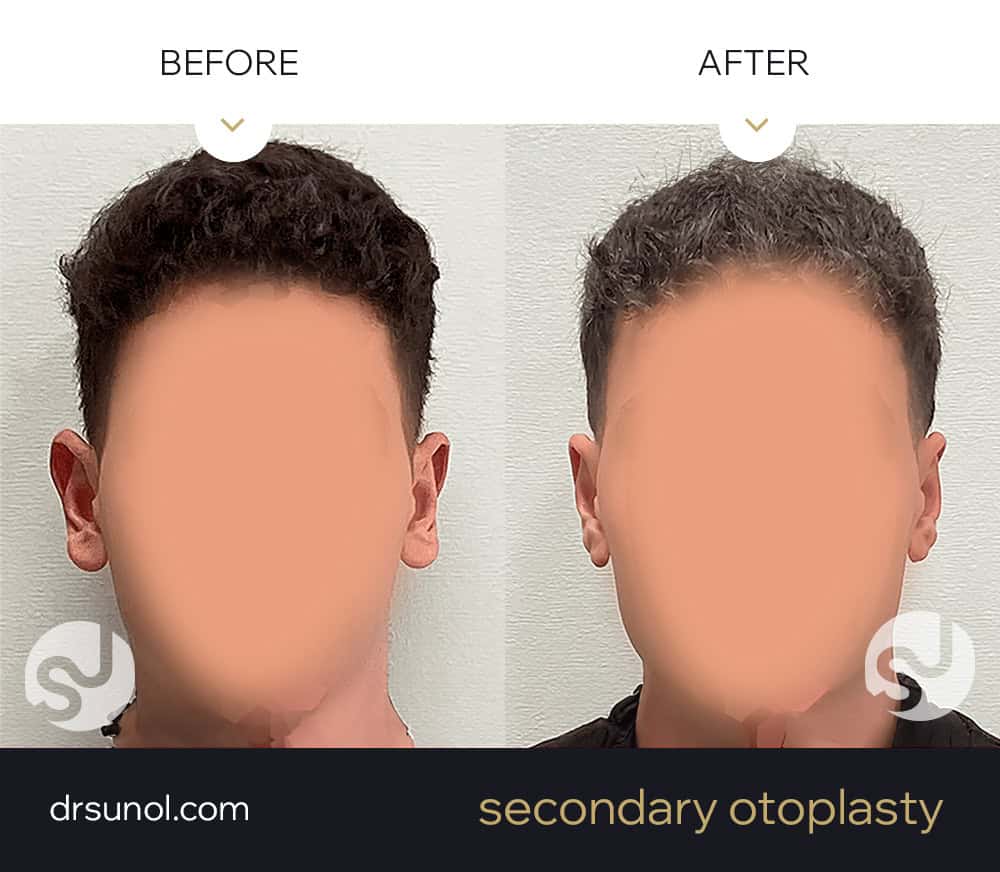
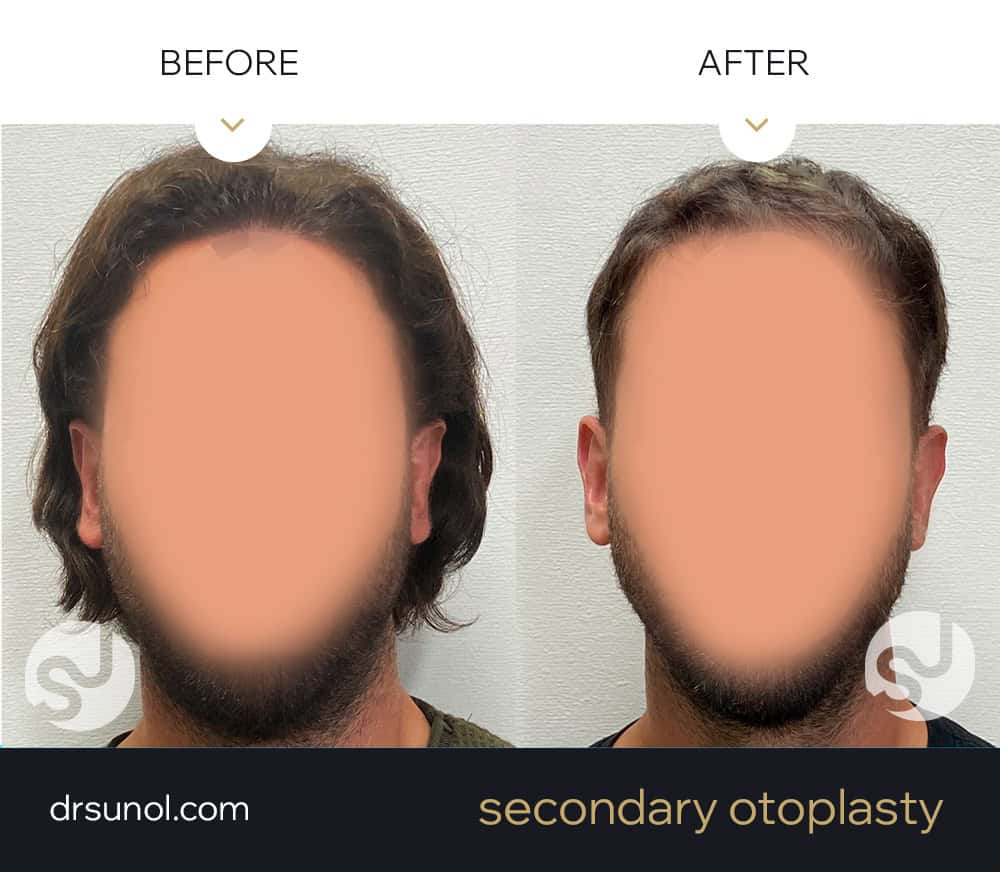
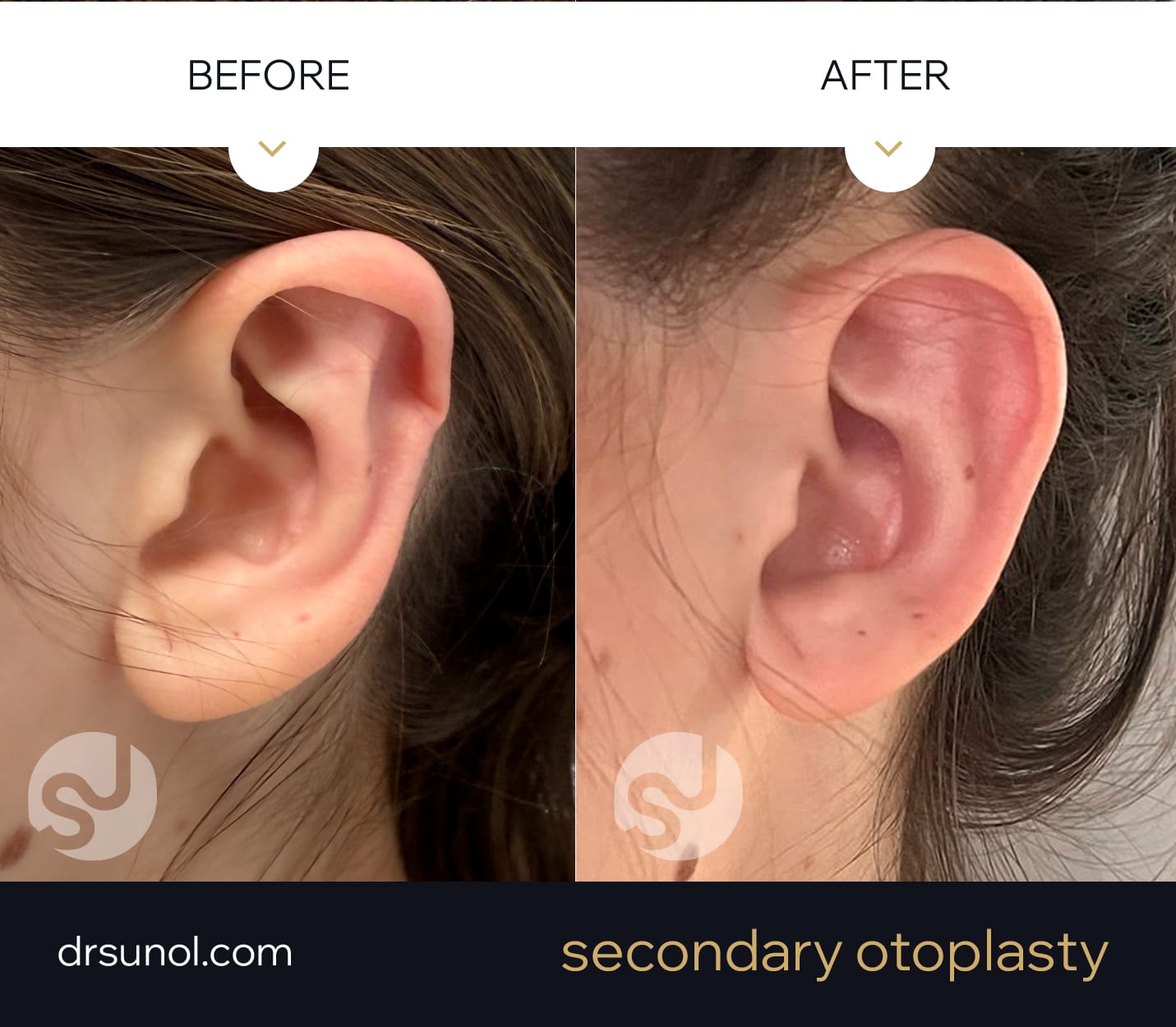
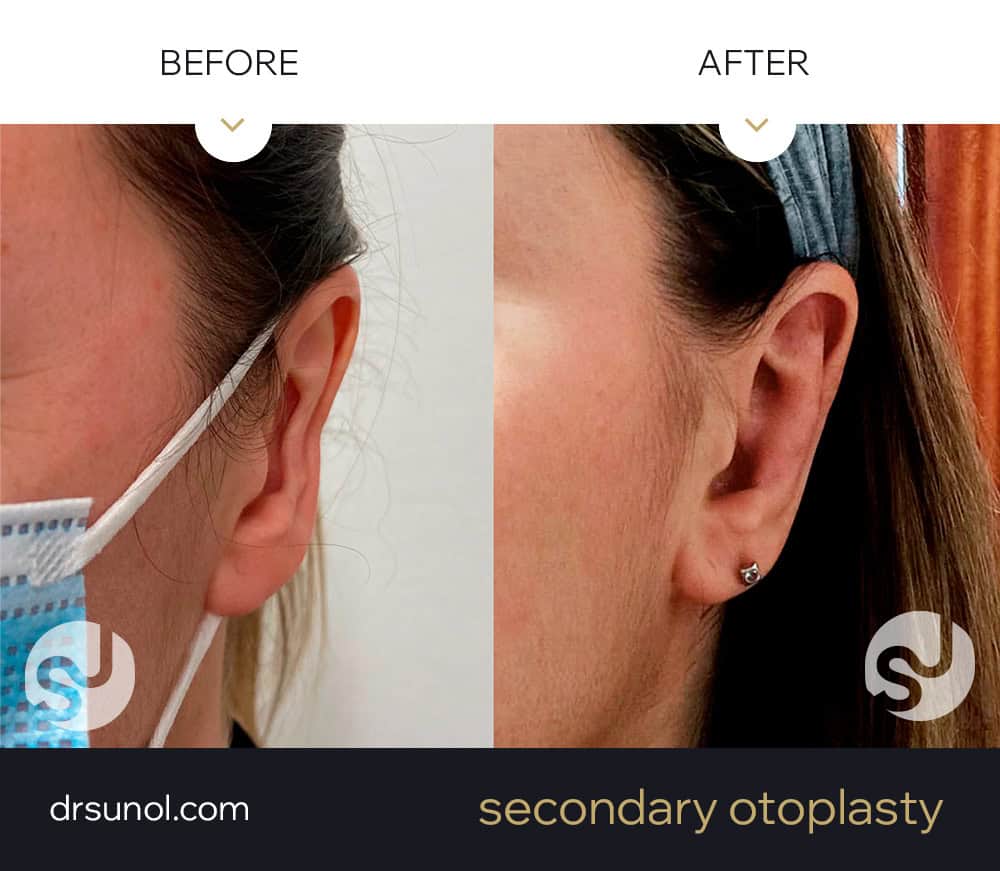
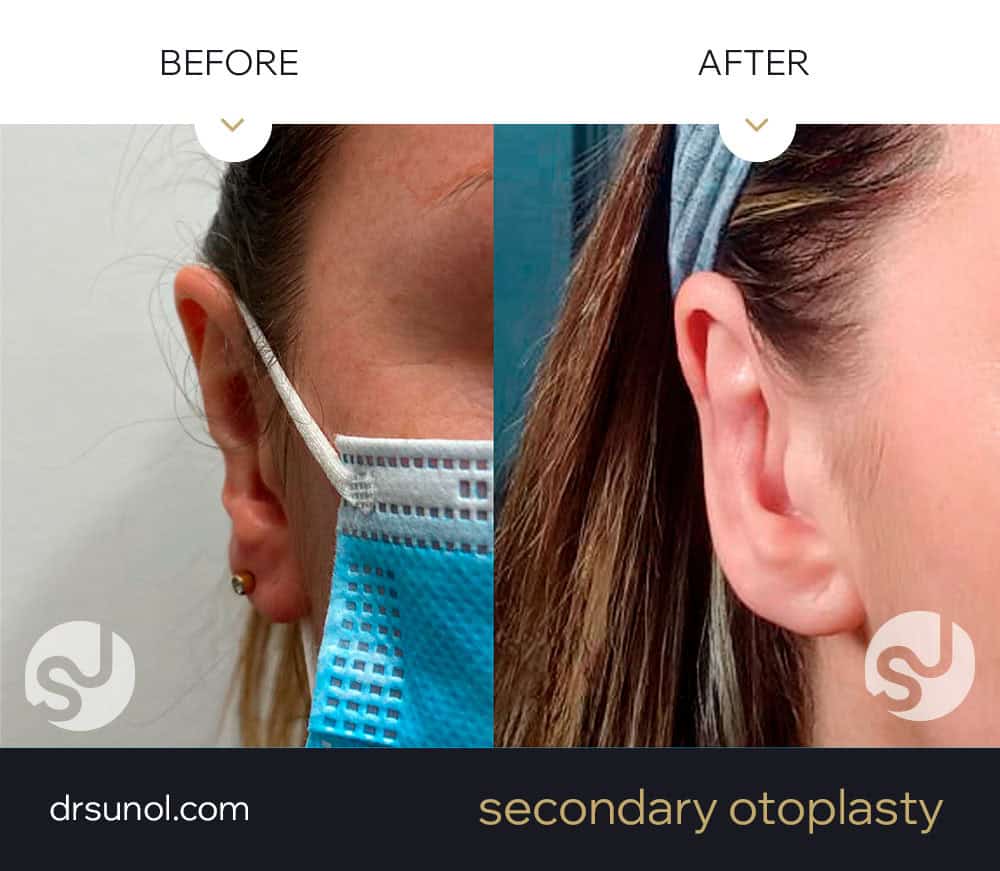
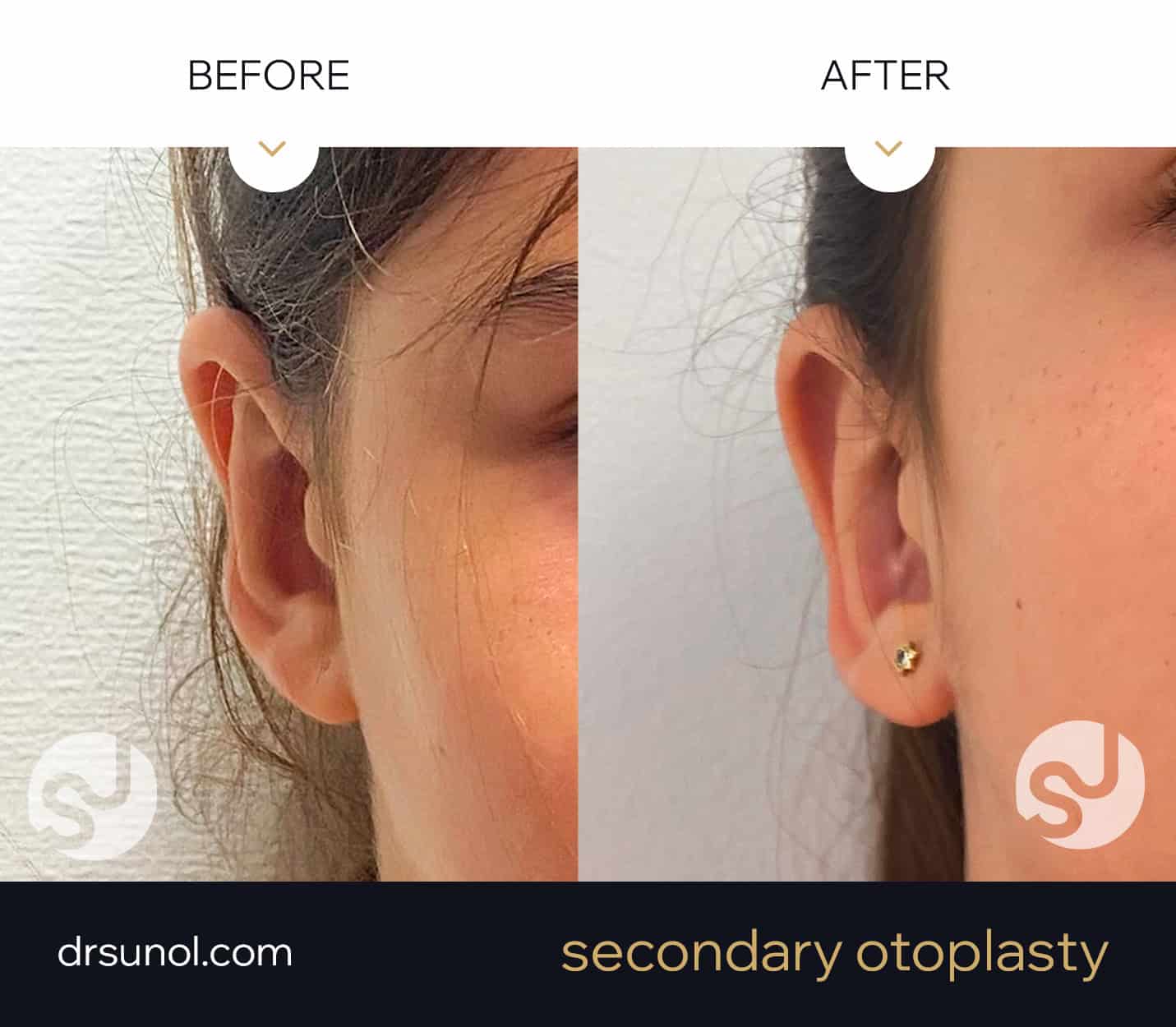
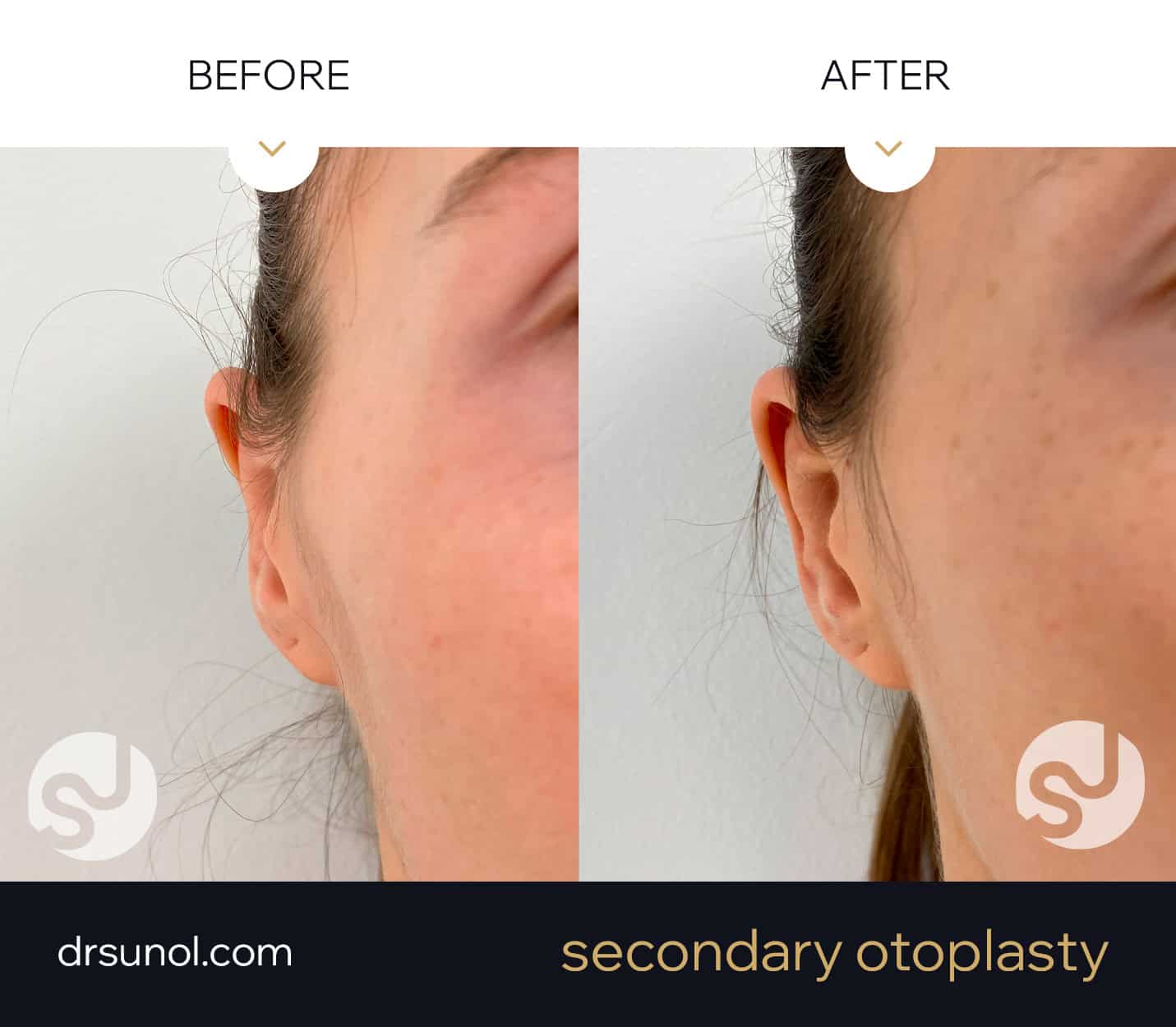
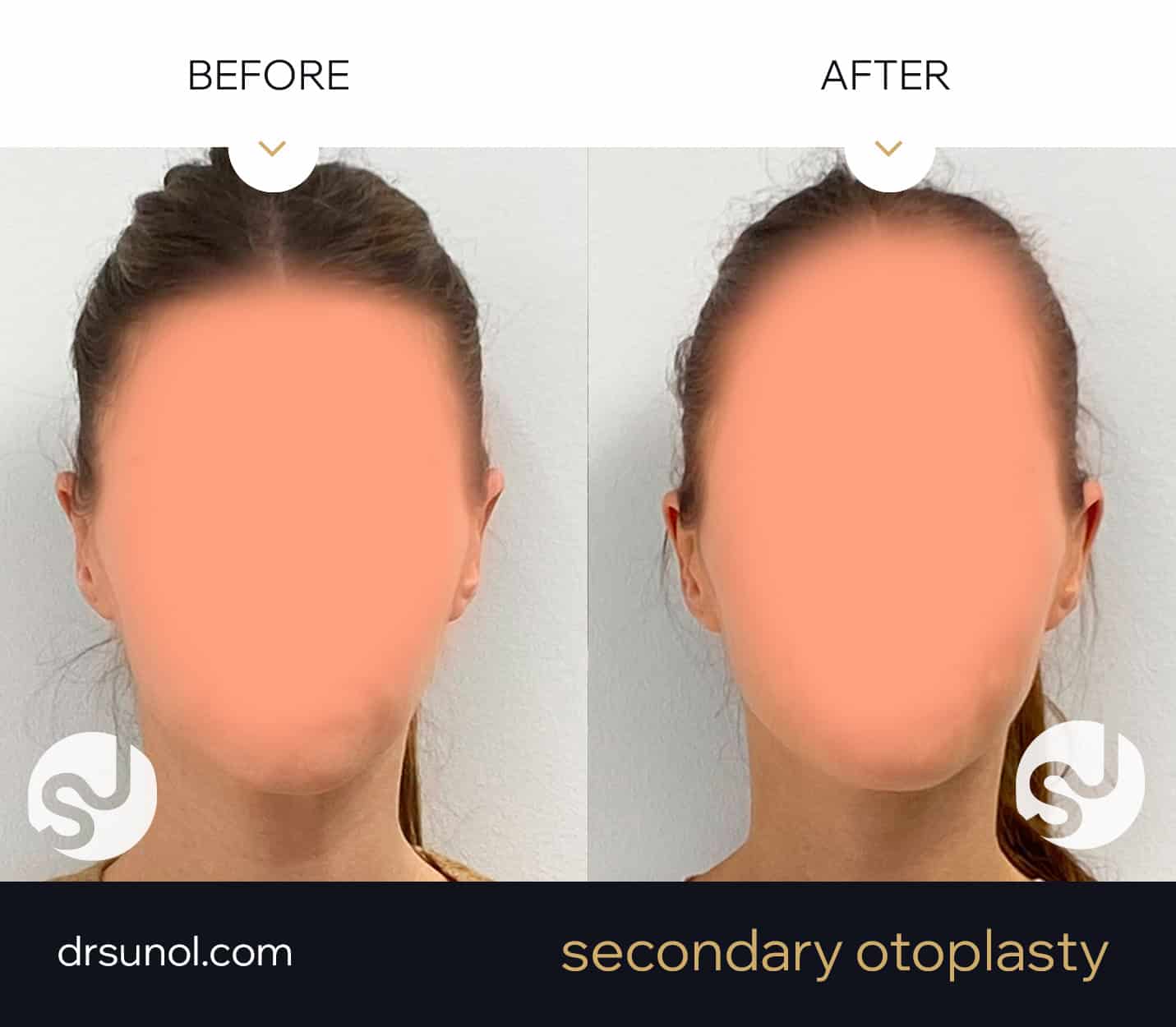
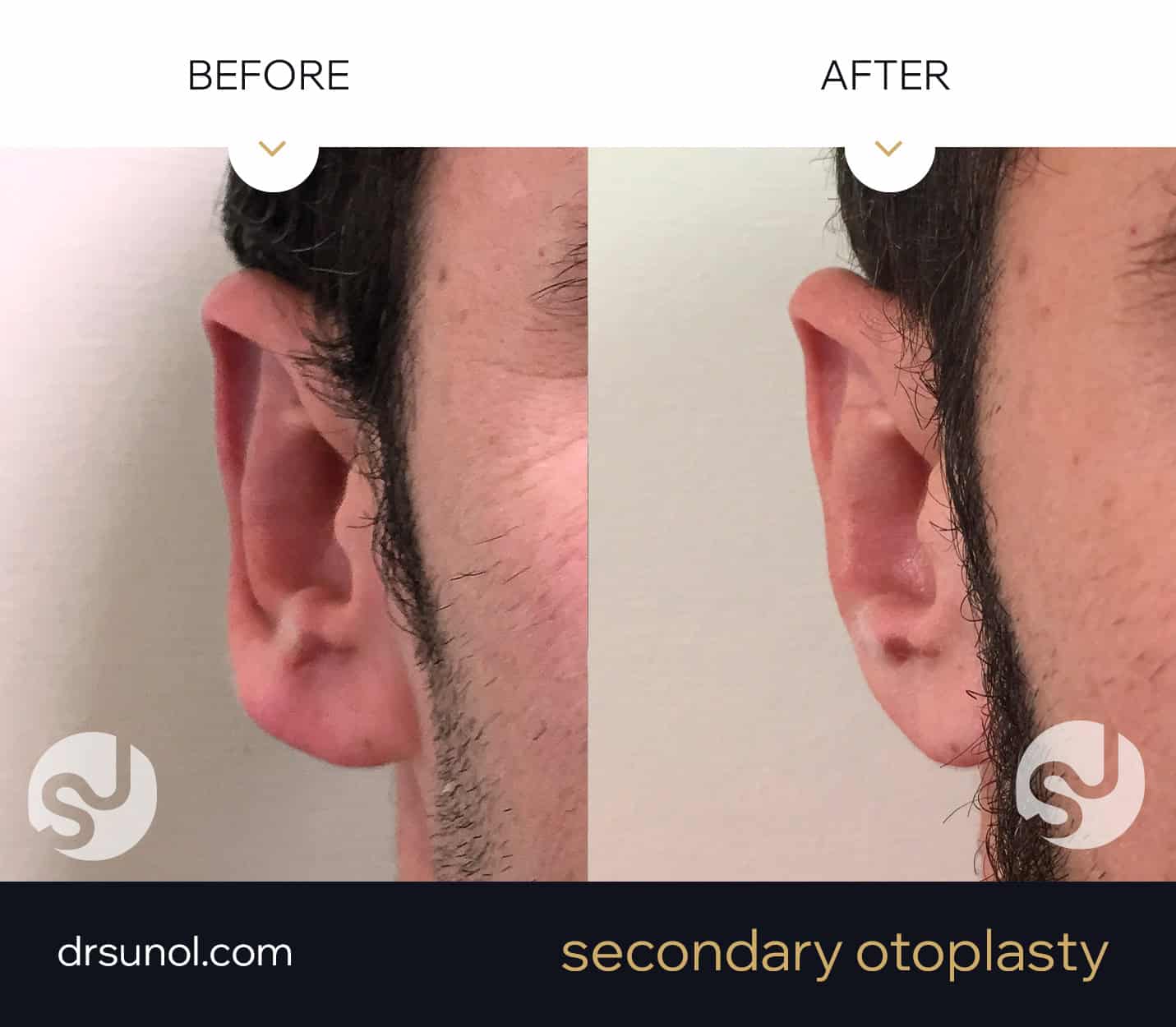
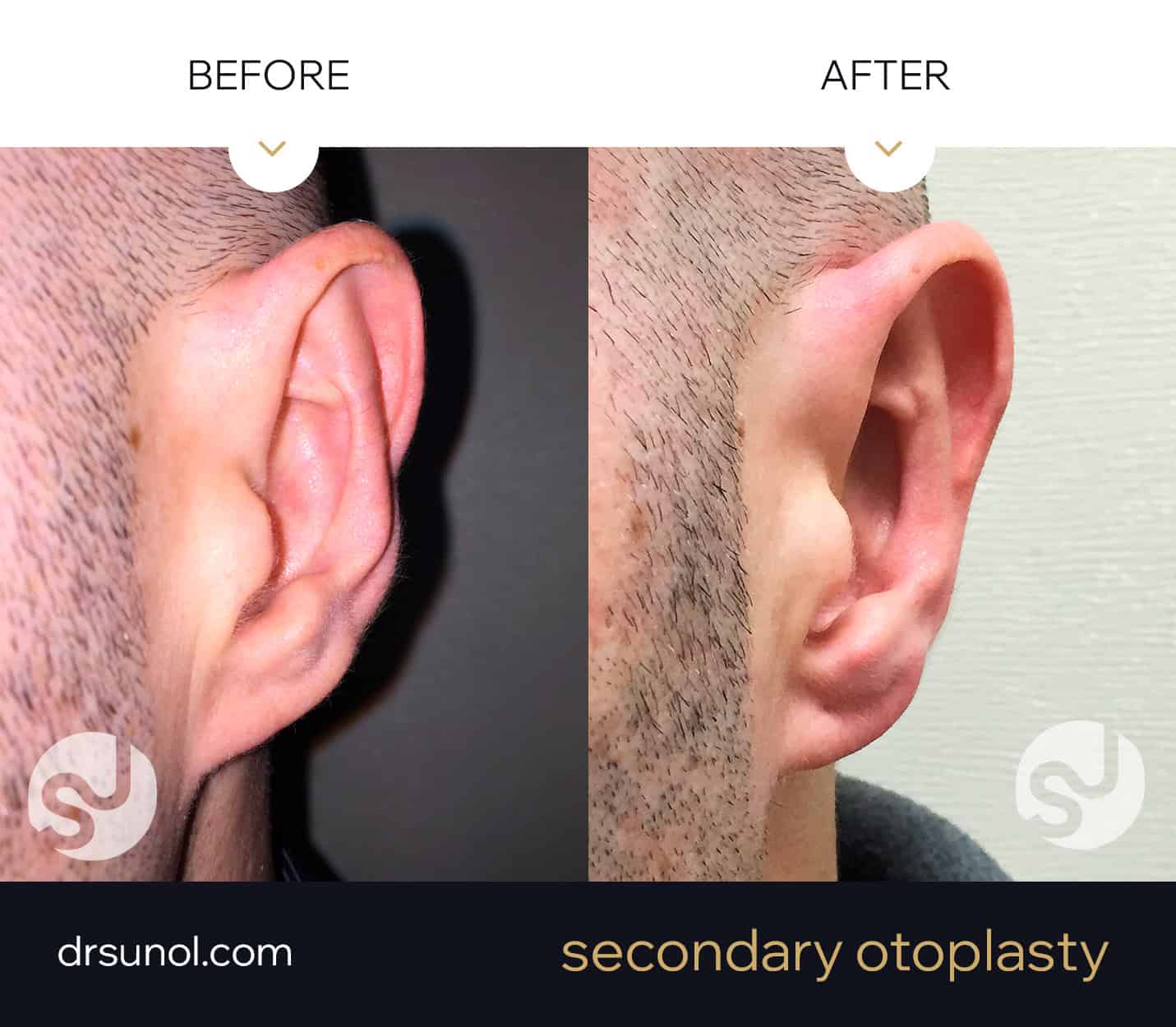
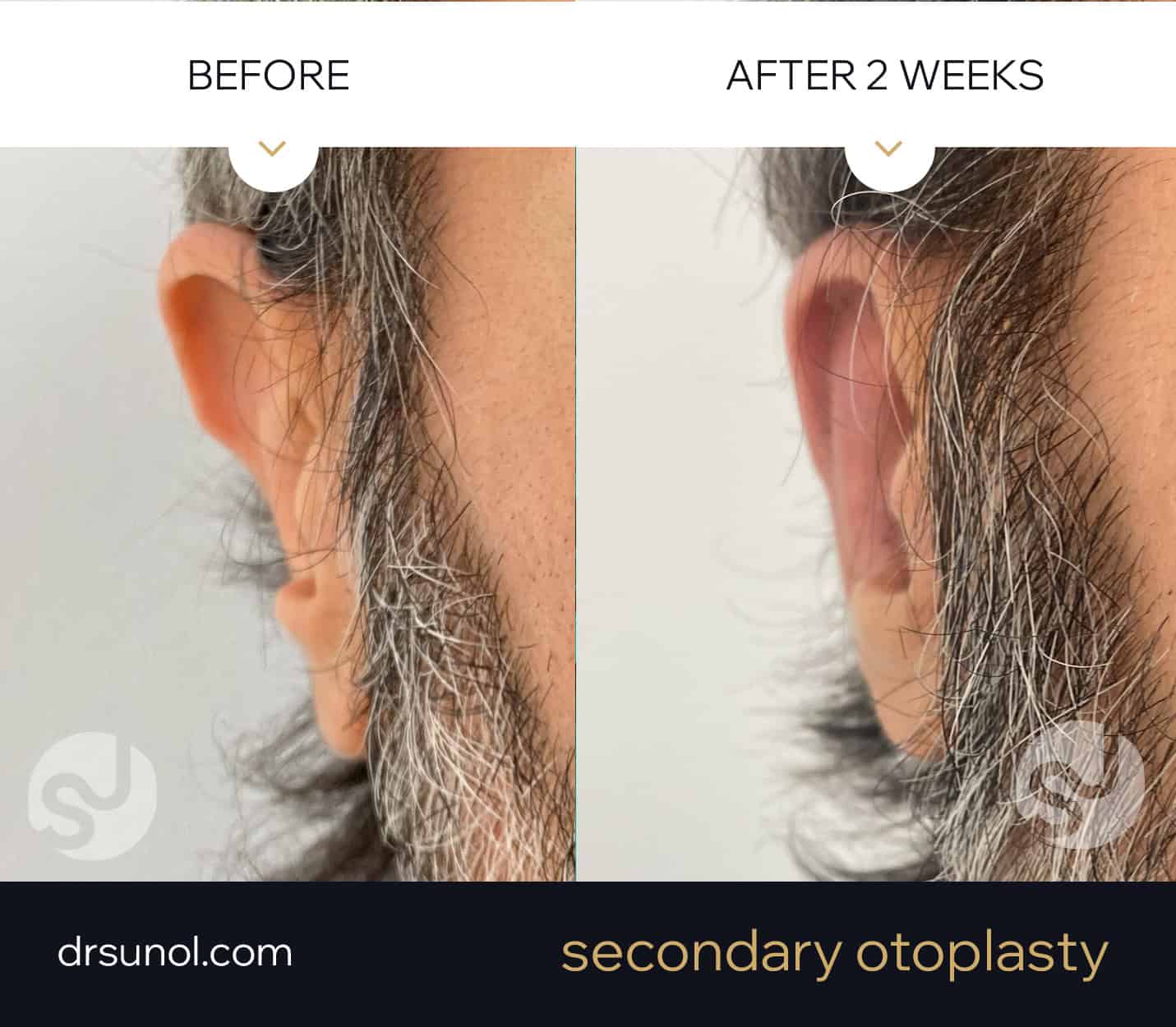
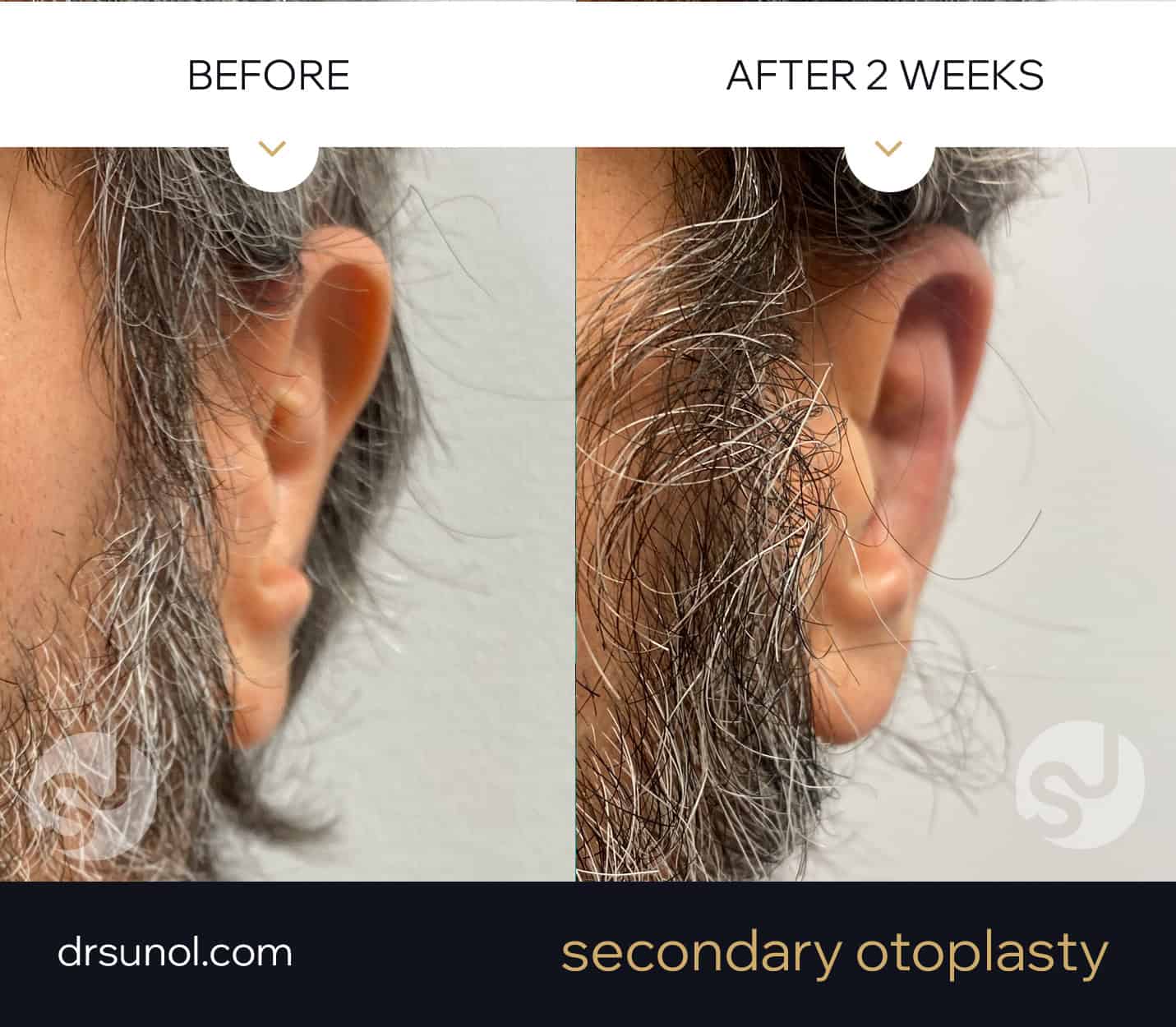
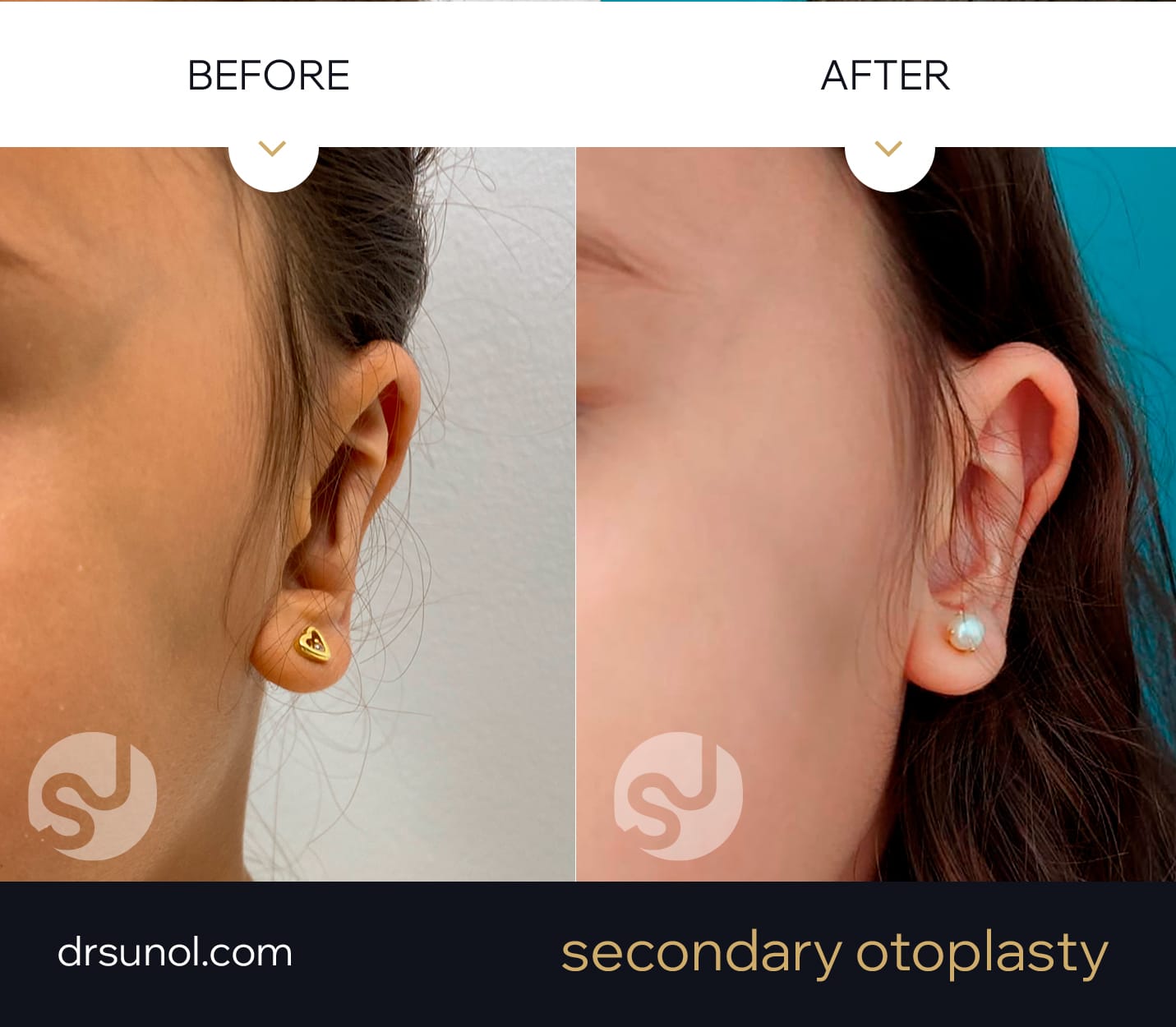
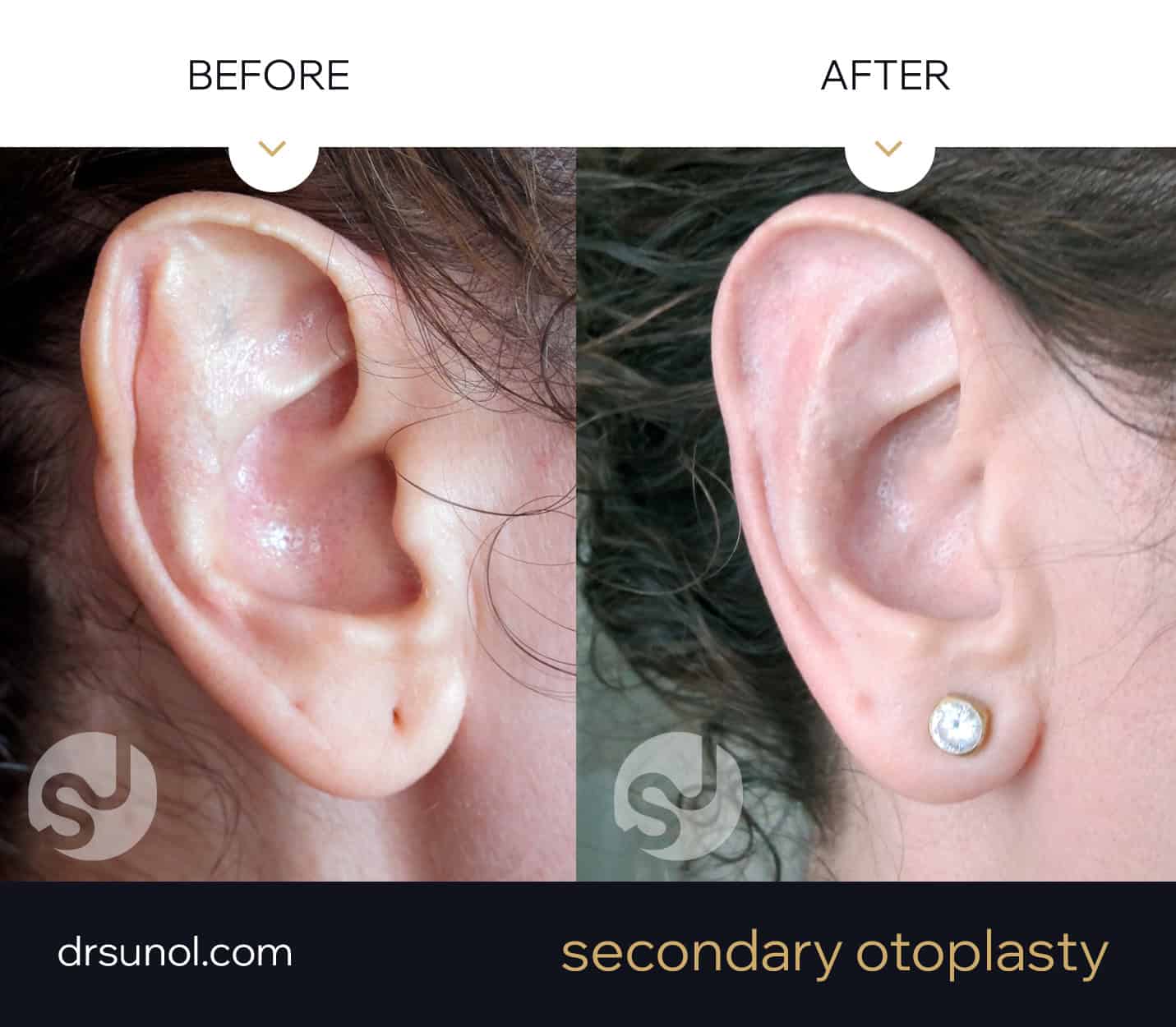
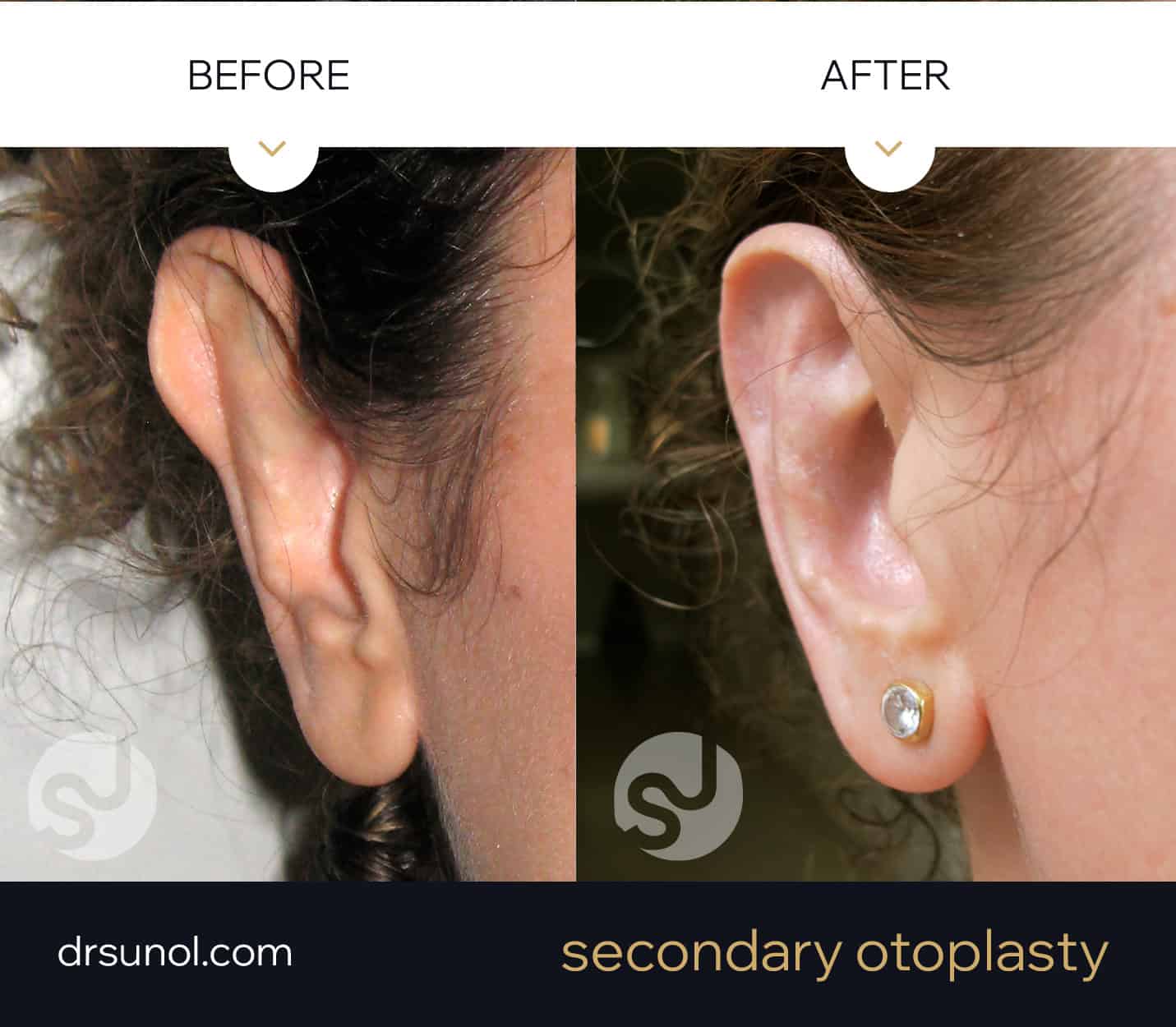
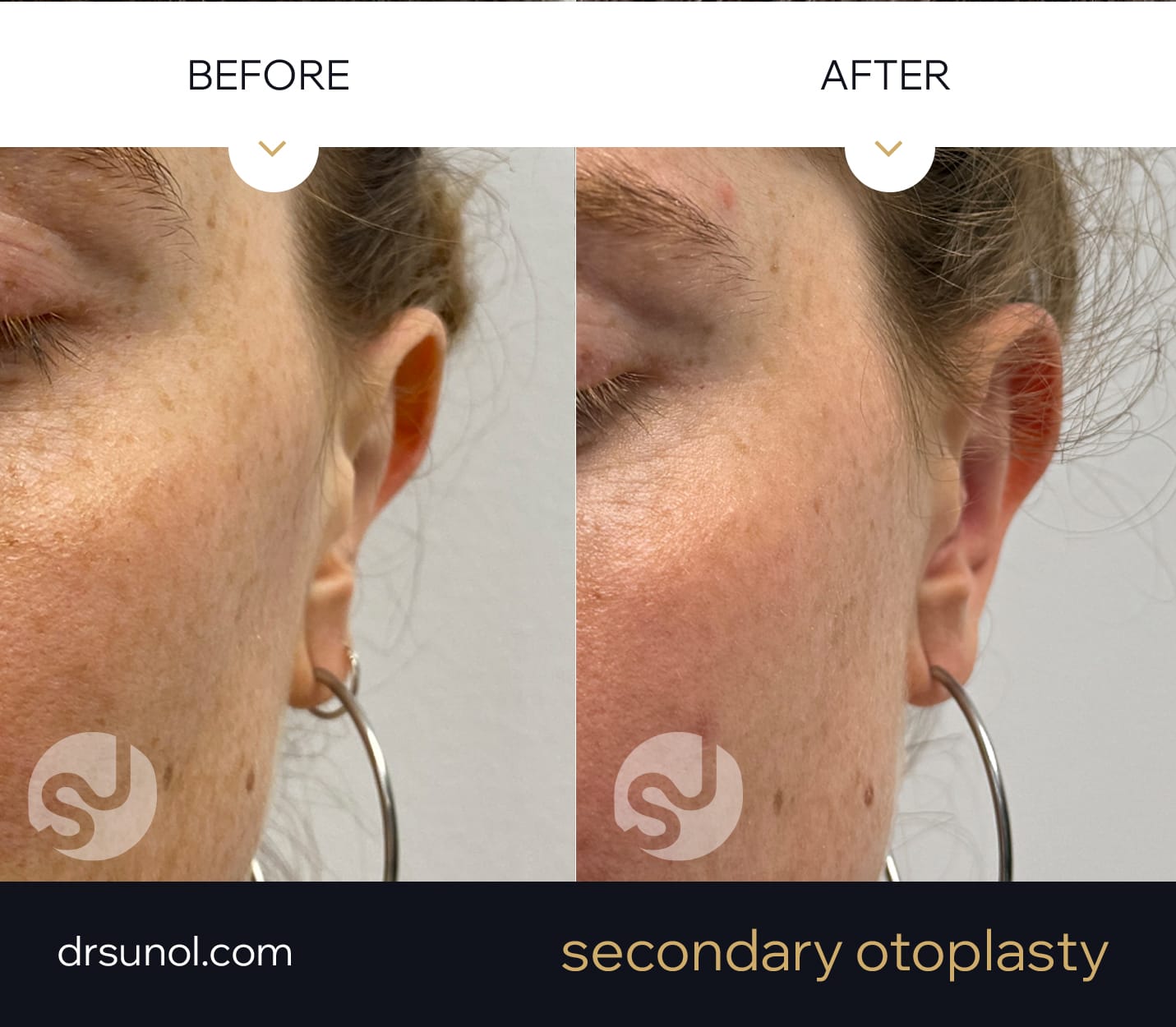
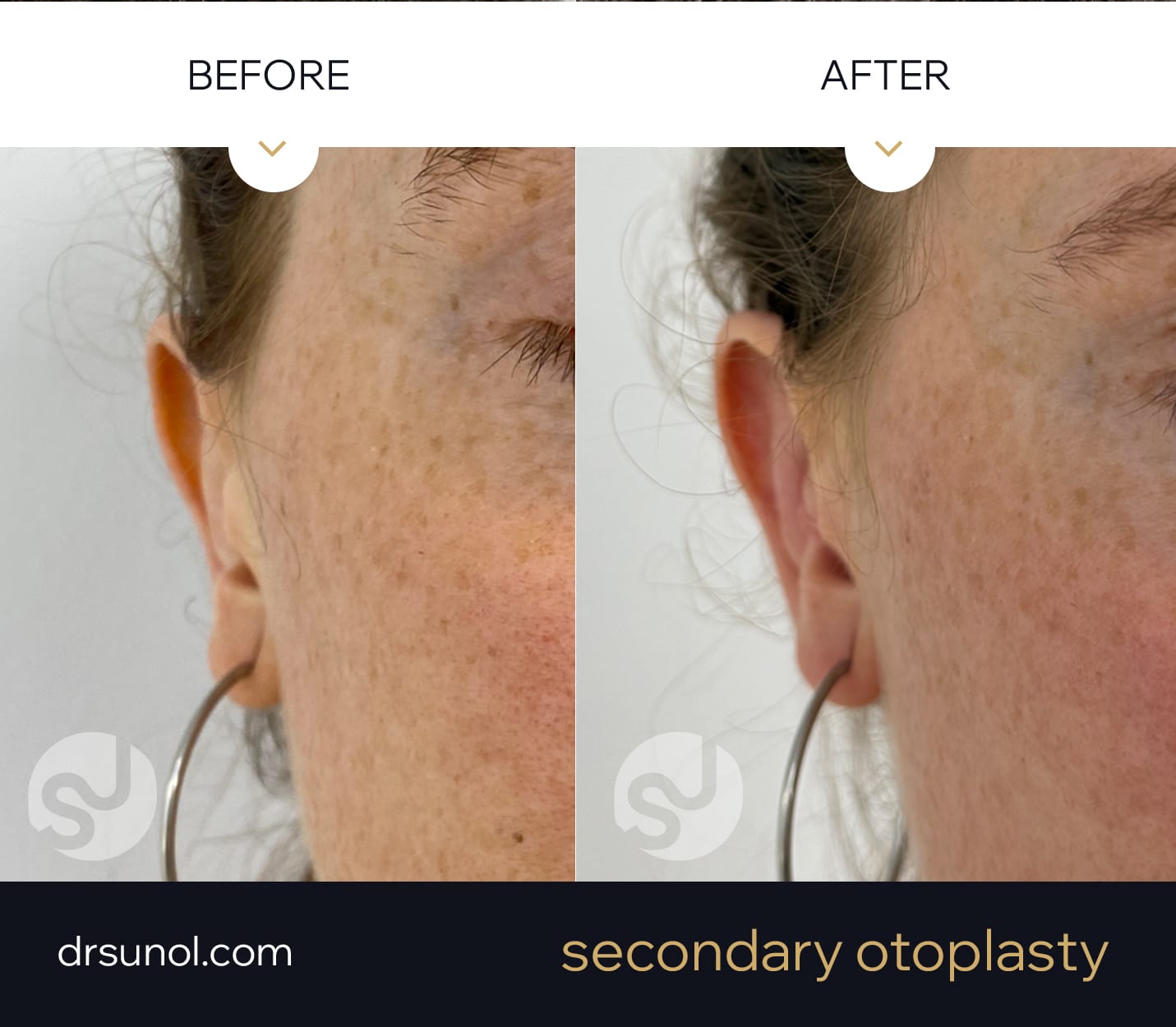
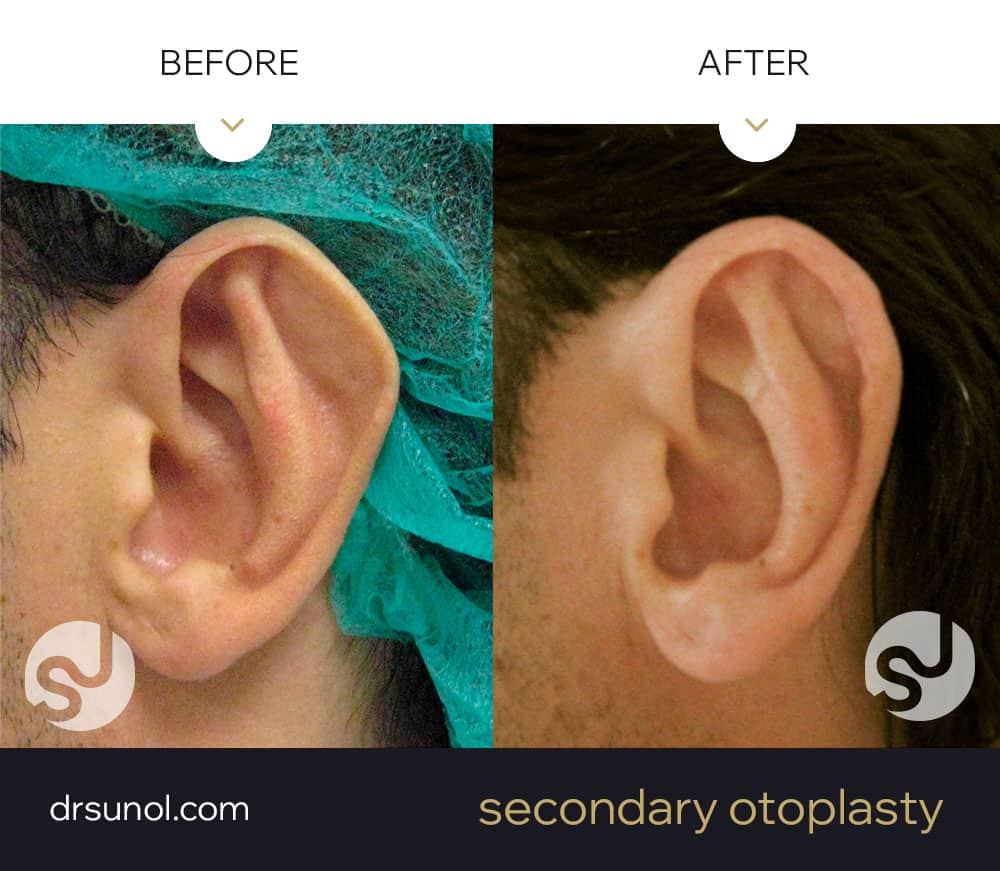
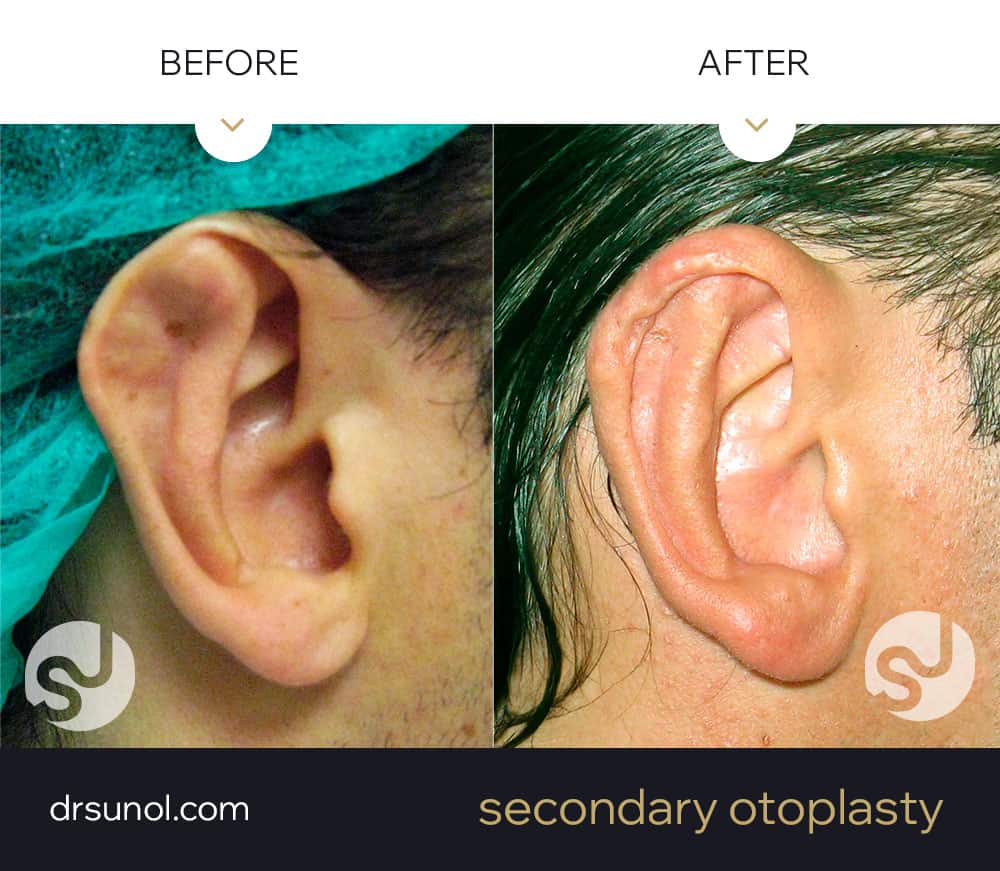
Secondary otoplasty before and after

Preoperative
- Recent blood analysis (less than 6 months).
- Do not take medications that alter coagulation (aspirin, minoxidil, etc).
- It is not necessary to come fasting.

Anesthesia
- Local anesthesia (without sedation) in a quiet environment.
- Personally carried out by Dr. Joaquim Suñol.
- Completely painless.

Duration
- Secondary otoplasty: 1 to 3 hours.
Care after secondary otoplasty
- It is highly recommended to stay in Barcelona 24 hours after surgery.
- Prophylactic antibiotic: 3 days (Azithromycin 1 tablet of 500mg/day).
- Analgesia: Paracetamol 1g/6h if there is pain.
- Do not wet wounds: 2 days.
- No smoking: 15 days.
- Apply 96º alcohol to the wounds after showering.
- Elastic band 24 hours/day during the first week (it can be removed a few hours a day).
- Elastic band to sleep during the second week.
- Resorbable sutures fall off on their own after 10-15 days (it is not necessary to return to the office to remove them).

Recovery
Although it depends on each case, in general:
- In the first two days, swelling and bruising appear.
- From the third day onwards the ears become less swollen.
- After a week there are still traces of inflammation and bruises, which will progressively resolve as the days go by.
- Avoid baths and swimming pools for 2-3 weeks.
- Avoid physical activity for 1-2 months.
- Avoid contact sports for 8 months.
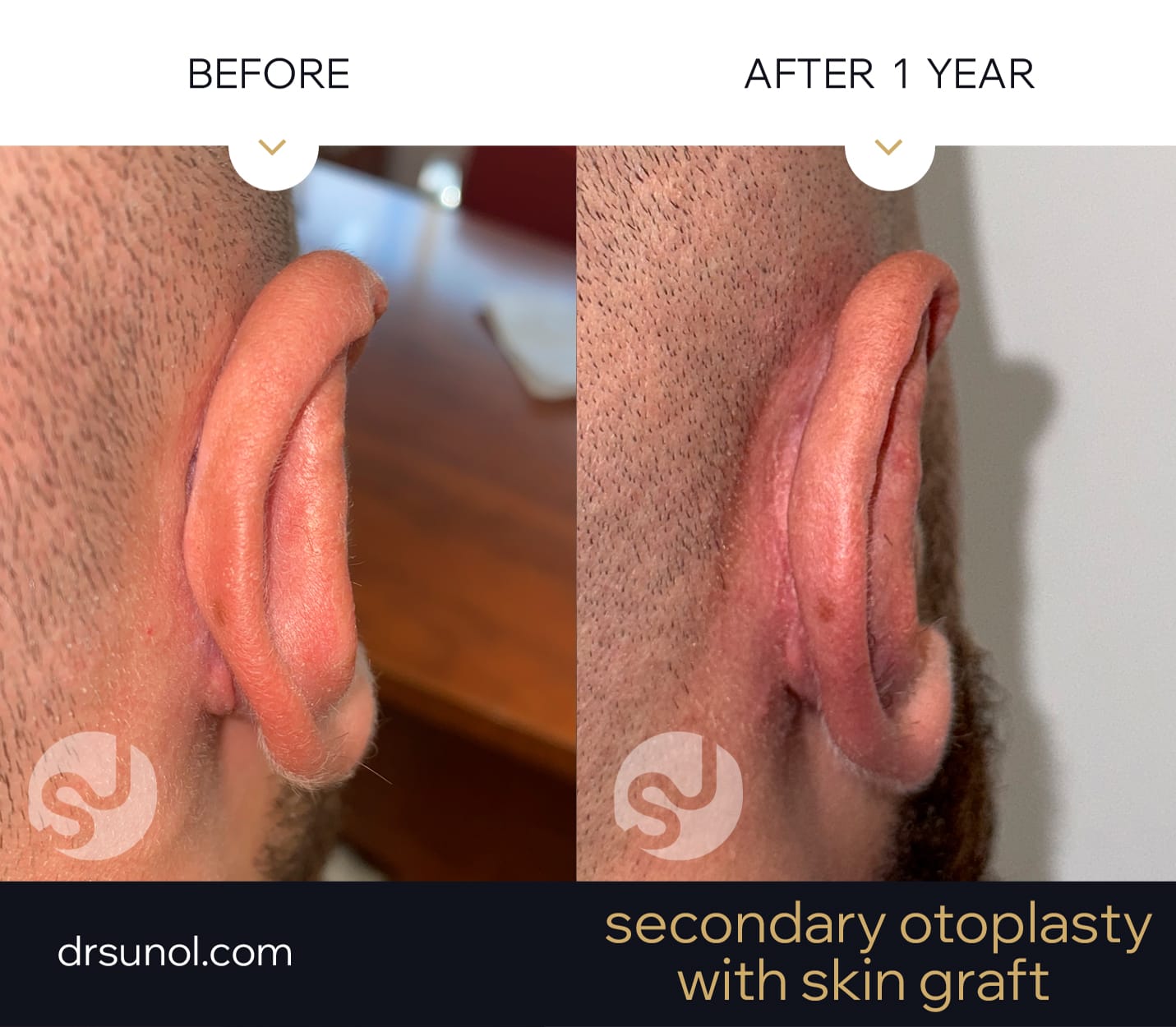
Images of Secondary Otoplasty before and after
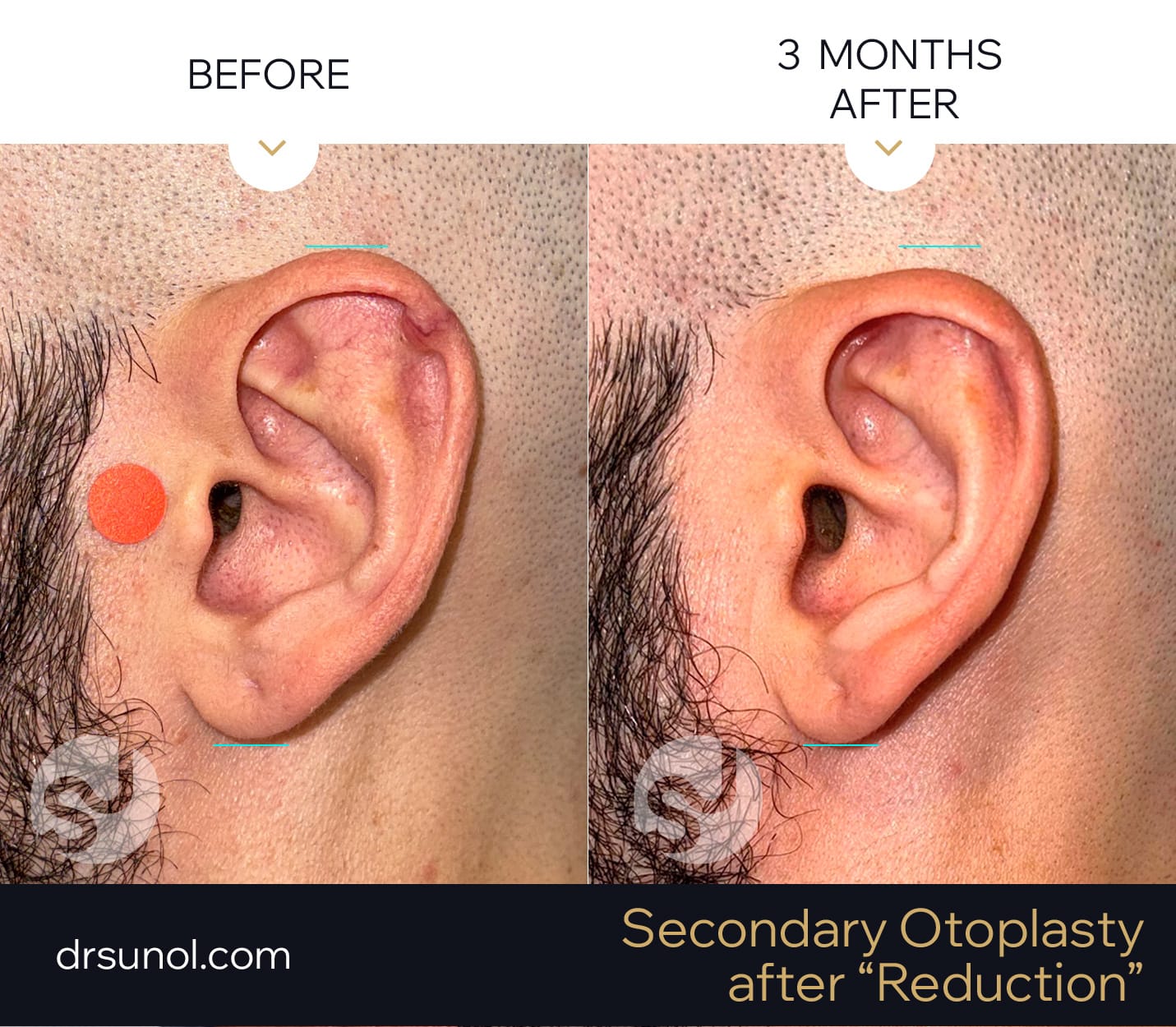
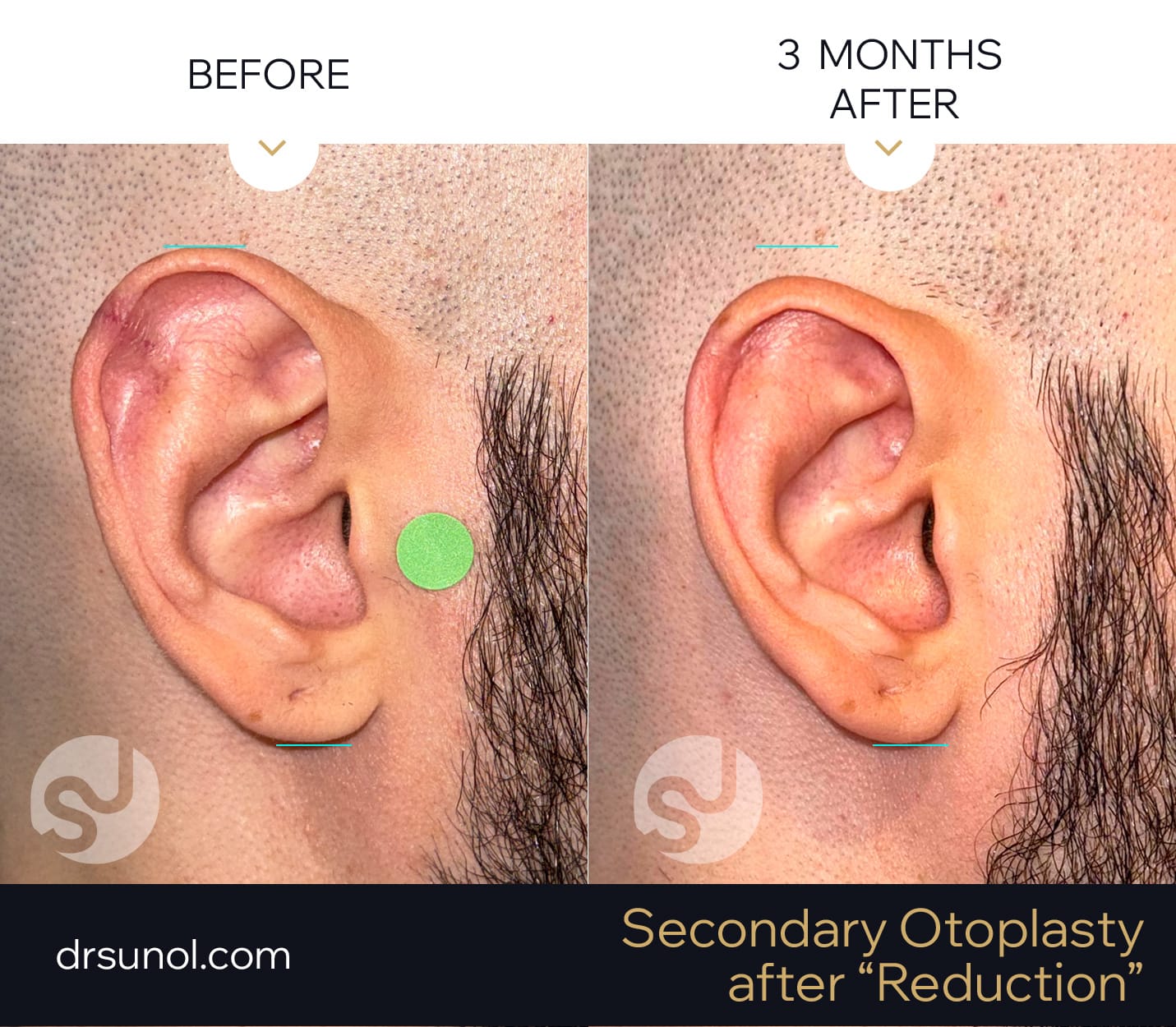
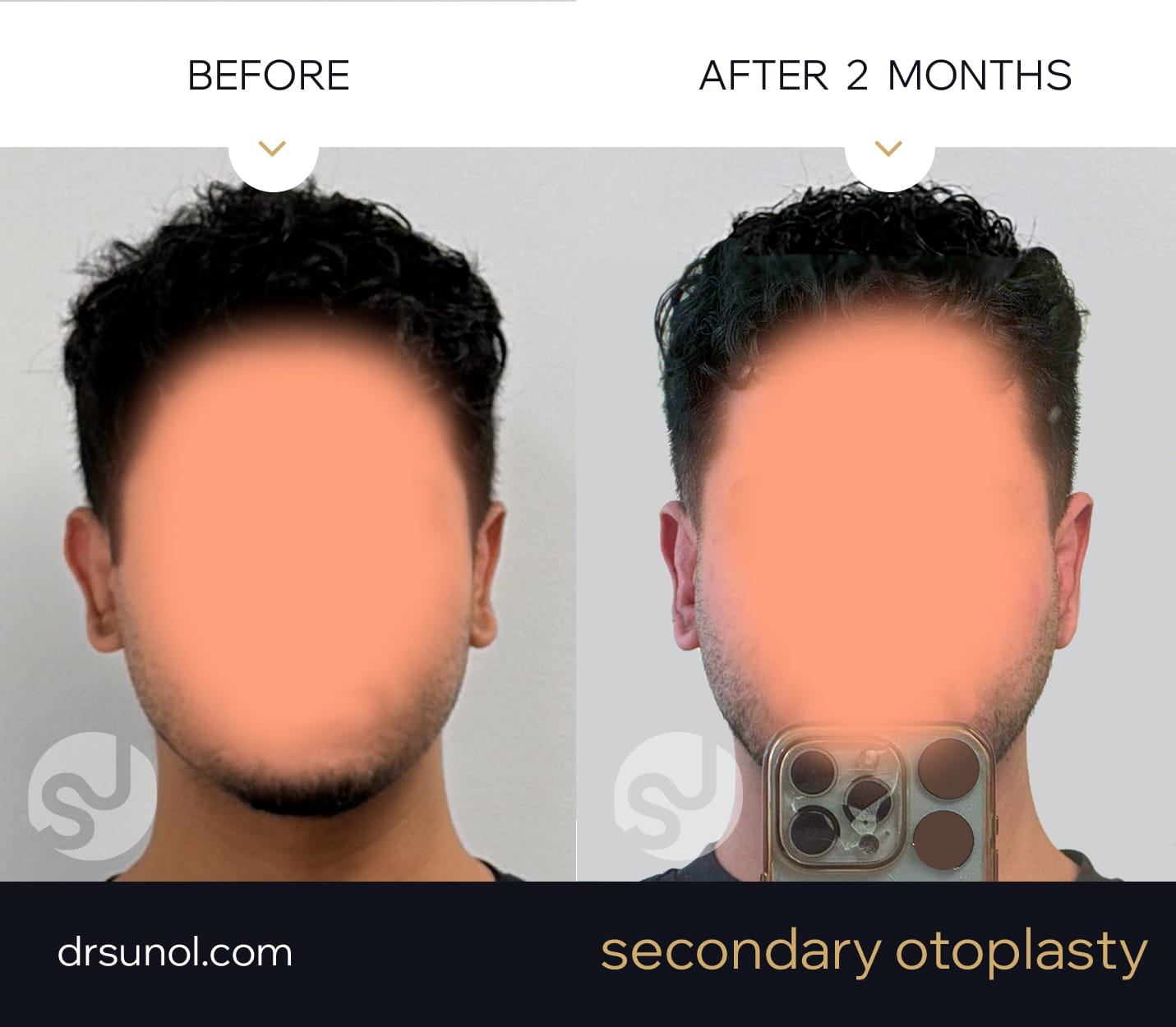
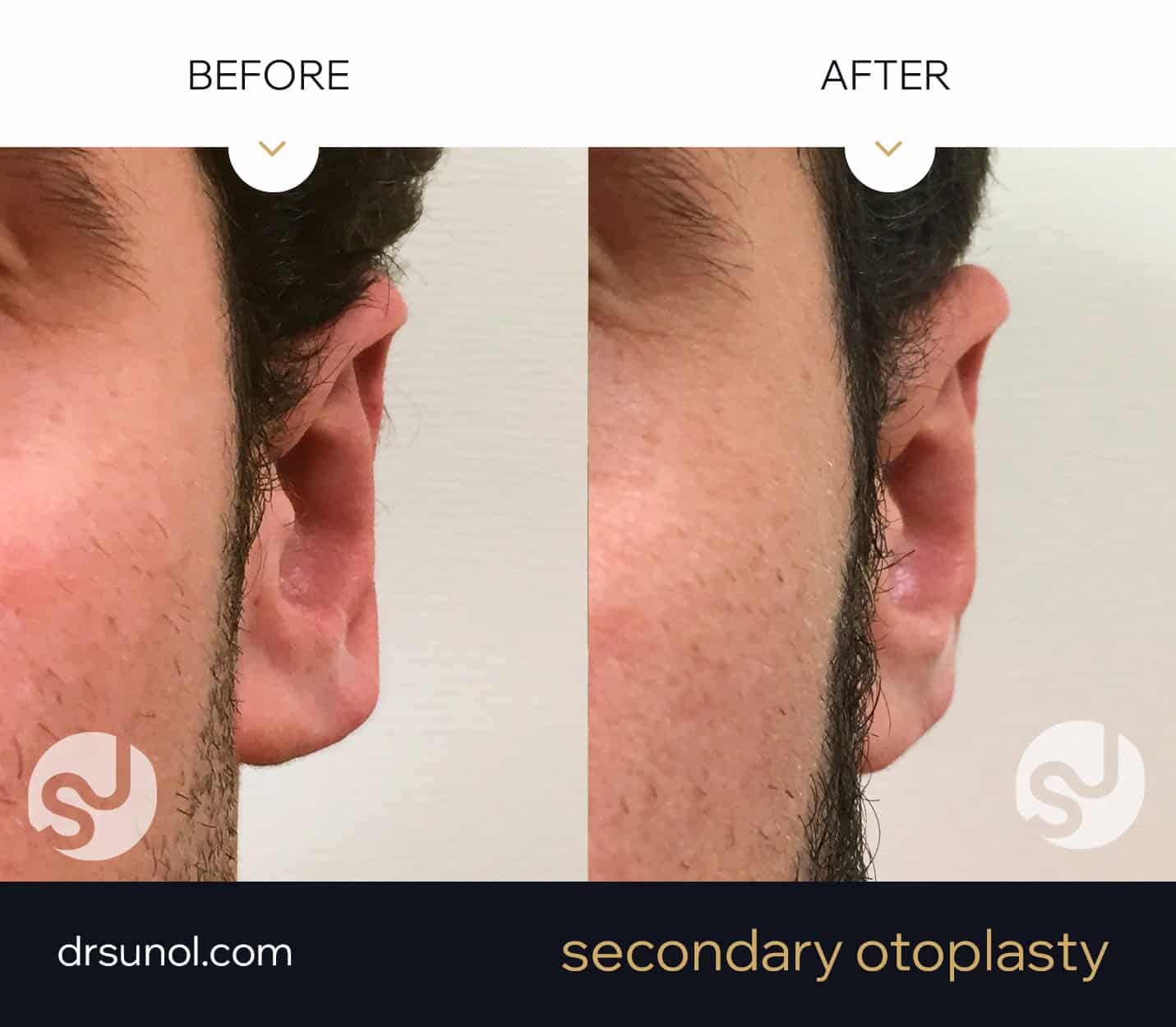
Price of a secondary otoplasty
The price of a secondary otoplasty can vary considerably depending on each case. The most advisable thing is that the surgeon can evaluate in the consultation the result of the first operation and the feasibility of improvements in a new surgery, and combine this with the real expectations of the patient who was previously operated on by another surgeon.
Normally, a secondary otoplasty requires procedures that may be more complex than a primary otoplasty and, therefore, this may affect the cost.
Surgeon expert in secondary otoplasty in Barcelona
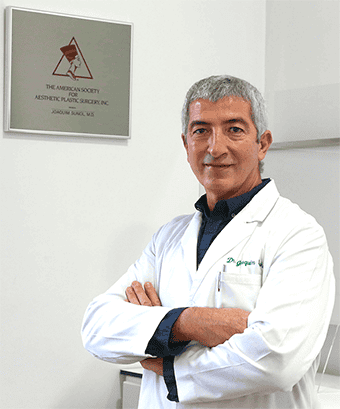
With extensive experience in Secondary Otoplasty Dr. Joaquim Suñol has become a world reference in Secondary Otoplasty and offers his patients permanent results of the highest quality.
If you are looking for the world’s best surgeon for Secondary Otoplasty, make an appointment at Doctor Suñol’s office located at the Evangelic Hospital of Barcelona, Spain.

Make an appointment with Dr. Suñol
