
With an extensive experience in auricular plastic aesthetic surgery, Dr. Joaquim Suñol has become a world reference in otoplasty and offers his patients permanent results of the highest quality.
If you are looking for the best otoplasty surgeon in Spain, make an appointment at Doctor Suñol’s office at the BE AETERNAL Plastic and Aesthetic Surgery Medical Center in Barcelona.
What is otoplasty
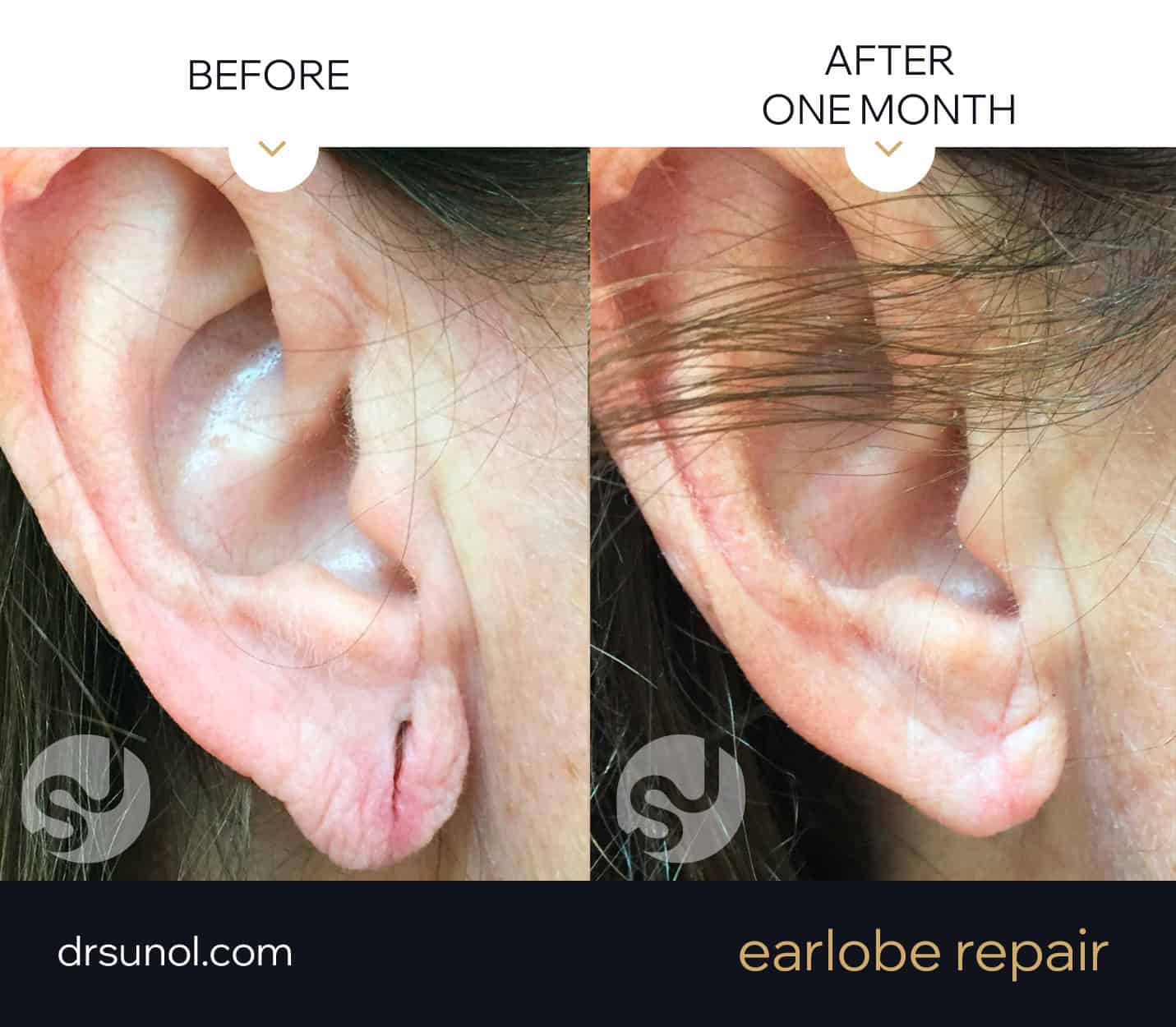
Otoplasty is a surgical procedure performed to modify the shape or size of the ears. These alterations usually create a feeling of great discomfort for the patient, who even chooses to hide their ears under their hairstyle. Ear otoplasty may consist of surgery for large ears, separated or protruding ears, ear asymmetry, rotated earlobes, and other congenital or acquired defects.
Dr. Suñol’s Advice
It is essential that the surgeon who operates otoplasties dedicates the necessary time to planning and preparing the intervention and selects the appropriate surgical method for each diagnosis. Attention to detail is the key to achieving a good result.
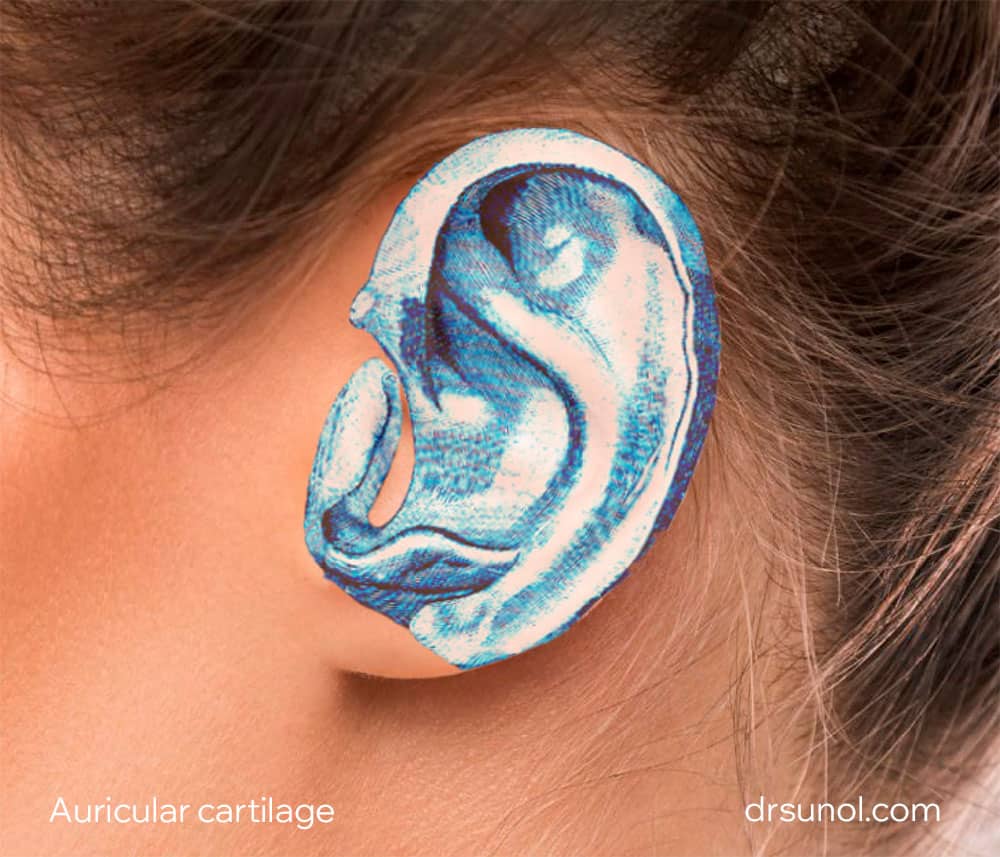
Anatomy of the ear
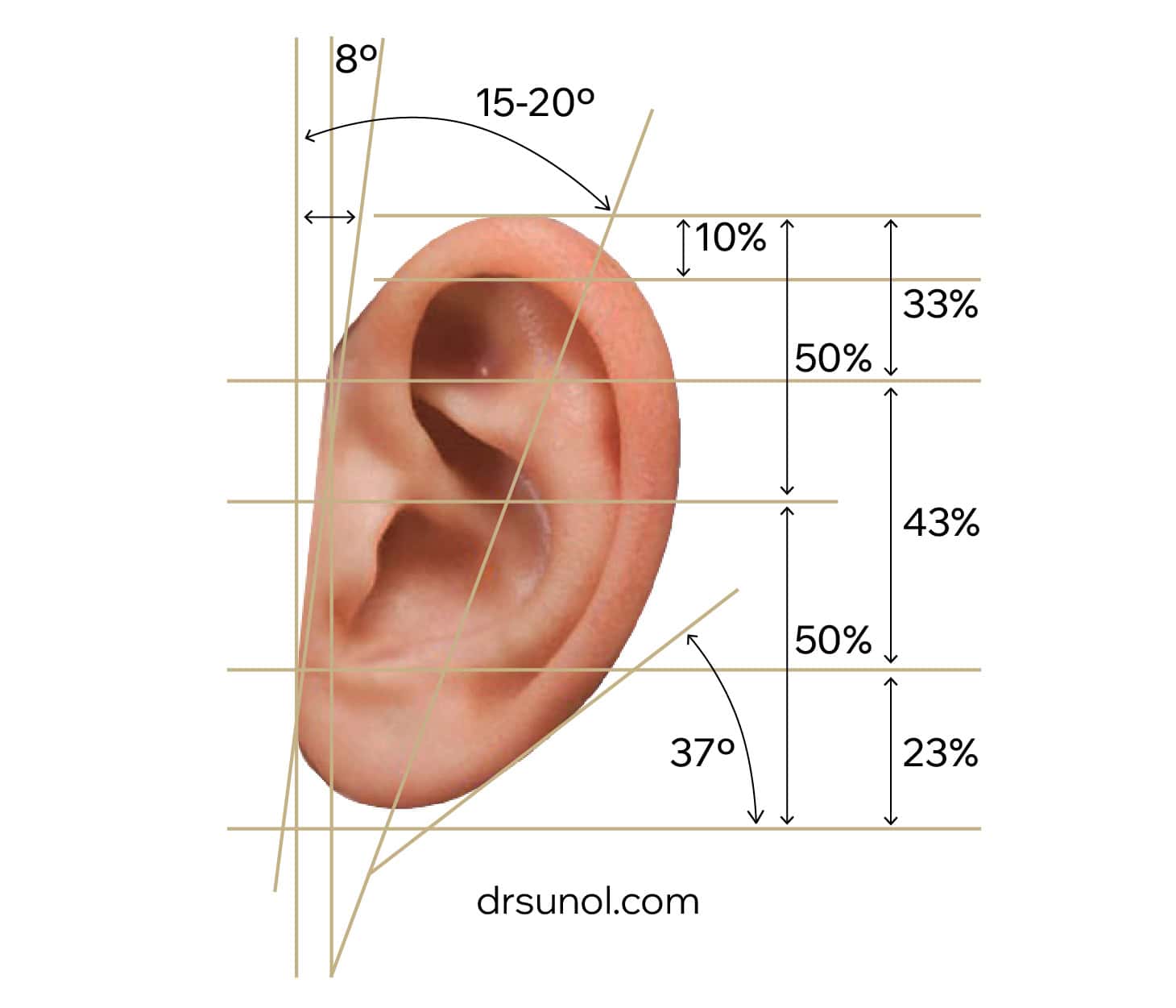
Not all ears are the same nor do all patients have the same alterations or the same proportions. Therefore, each case must be studied to achieve the expected result with otoplasty.
The detailed analysis of the anatomy of the ear and the careful selection of the appropriate surgical technique for each individual person will allow us to obtain the best possible solution, in complete naturalness.

Otoplasty according
to the shape of the ear
- Ears that are too separated from the head (protruding ears, loop ears) can be correctly repositioned closer to the head with a minimally invasive otoplasty under local anesthesia. To bring the ears closer to the head, the necessary access incision is usually located behind the ear, next to the fold that the ear forms with the head, so it usually becomes completely unnoticed.
- There are different methods to modify the shape of the ears:
- Some are based on the weakening and/or reduction of certain parts of the ear cartilage, thus allowing its shape to be modified.
- Others consist of the application of permanent or temporary (resorbable) sutures to model and approximate the auricular structures.
- The objective of both techniques is to achieve an anatomically proportioned and totally natural ear, restoring or maintaining the grooves (helix and antihelix) and the normal angles of the ear.
Dr. Suñol’s advice
We are not in favor of the use of the so-called “Otoplasty without surgery” that uses Earfold implants that are placed under the skin, on the anterior surface of the ear, to “clamp” the fold of the antehelix, since they do not allow to adapt the degree of necessary folding for each different type of ear or ear. existing cartilage thickness. It is a technique that offers mediocre aesthetic results, also adding possible potential complications such as visibility or palpation of the implant, discomfort, rigidity, infection…
- Occasionally, ear lobes may be of normal size, but may be rotated or twisted. In these cases, when a person looks head-on in the mirror, they see their lobes too wide or big . To solve this alteration, a small incision hidden behind the earlobe may be needed but usually becomes completely unnoticed.
- In ears in which the helix or auricular rim is not folded and gives the appearance of a flat ear, it may be possible to recreate the fold of the helix through an incision that is hidden in the fold and the placement of external sutures./li>
Dr. Suñol’s Advice
Otoplasty for large ears (Macrotia)
- In ears that are too large, it is possible to reduce the size of the entire ear or just the part of the ear that is larger in relation to the rest. To reduce the ears, it is usually necessary to make skin incisions whose residual scars can be hidden in the natural folds, and thus go unnoticed.
- In ears with the lobe that is too large in proportion to the rest of the ear (very common in elderly people), it may be possible to reduce the size of the lobe.
- In ears in which the auricular tubercle is too large and evident, it is possible to reduce its size and achieve a more proportional ear.
- To obtain the most natural result possible, it is very often necessary to modify not only a single area of the ear, but several different aspects or areas must be addressed:
- Superior: Folds of the cartilage of the antihelix and helix.
- Medium: Reduction of the cartilage of the auricular concha.
- Inferior: Rotation of the lobes and/or reduction in the size of the ear lobes.
Single ear otoplasty
Sometimes only one of the ears is the one that presents alterations, while the other is completely normal. In these cases, a unilateral otoplasty may be possible.
Otoplasty for children
It is common for young children to ask their parents about the operation, since their schoolmates make fun of them. Otoplasty in children can be performed at an early age, without waiting for their complete development. Dr. Joaquim Suñol, when operating on young children, in most cases, can do it only with local anesthesia without sedation, because he himself performs it with great care and in a relaxed and calm environment, and the children They usually accept it without problems. In rare cases, the use of local anesthesia with sedation or general anesthesia and subsequent admission for a few hours (day hospital) may be necessary.
Ear surgery
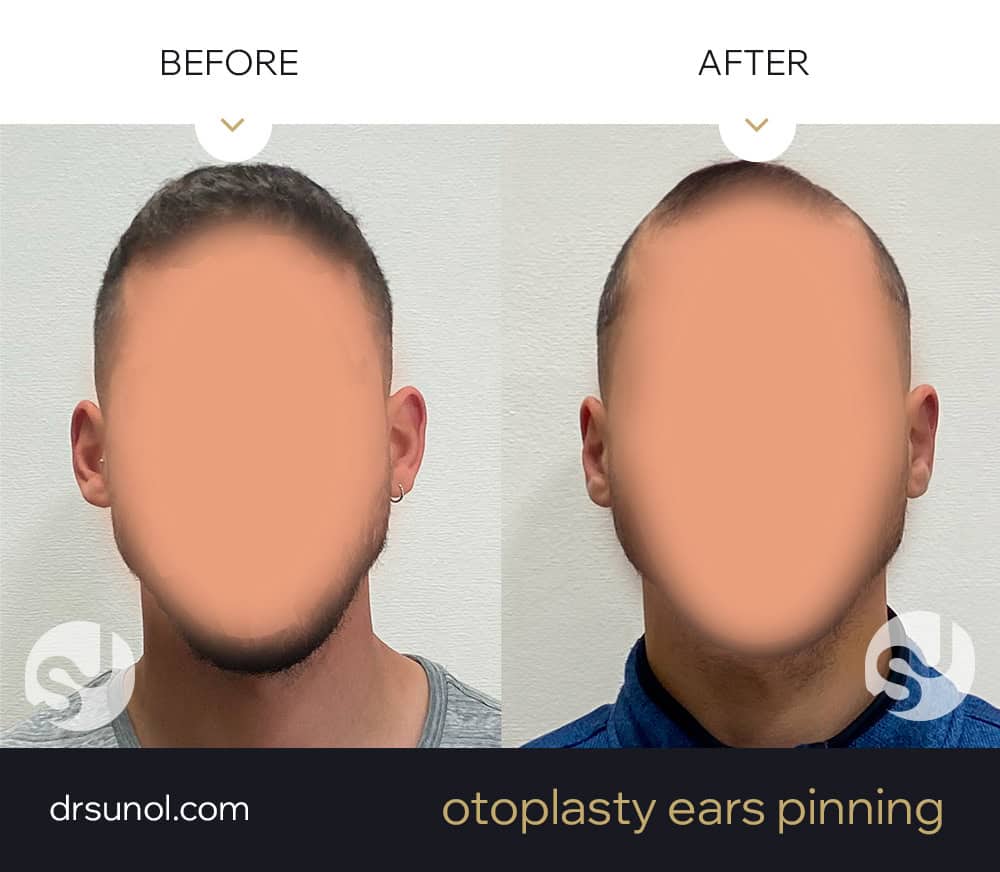
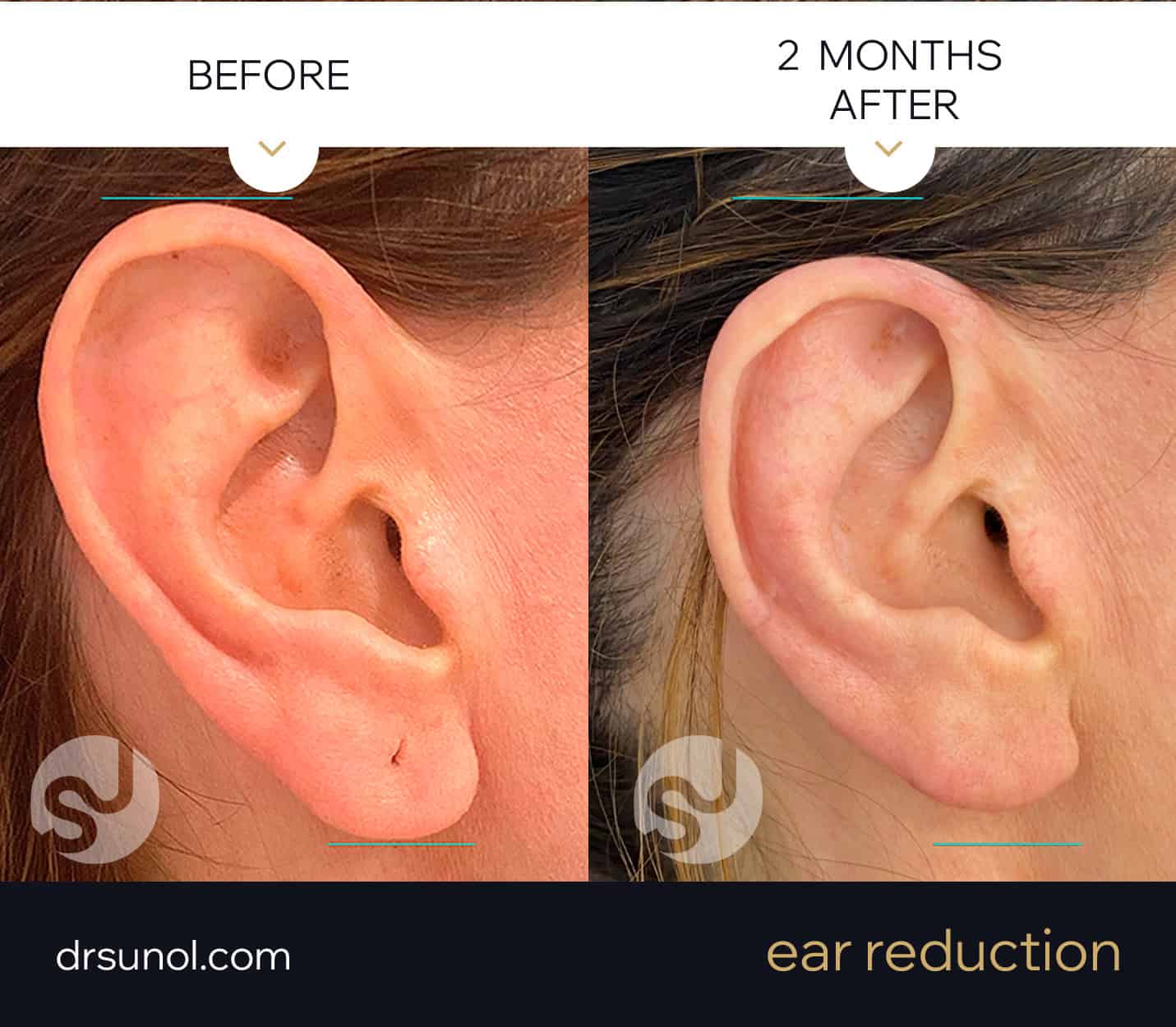

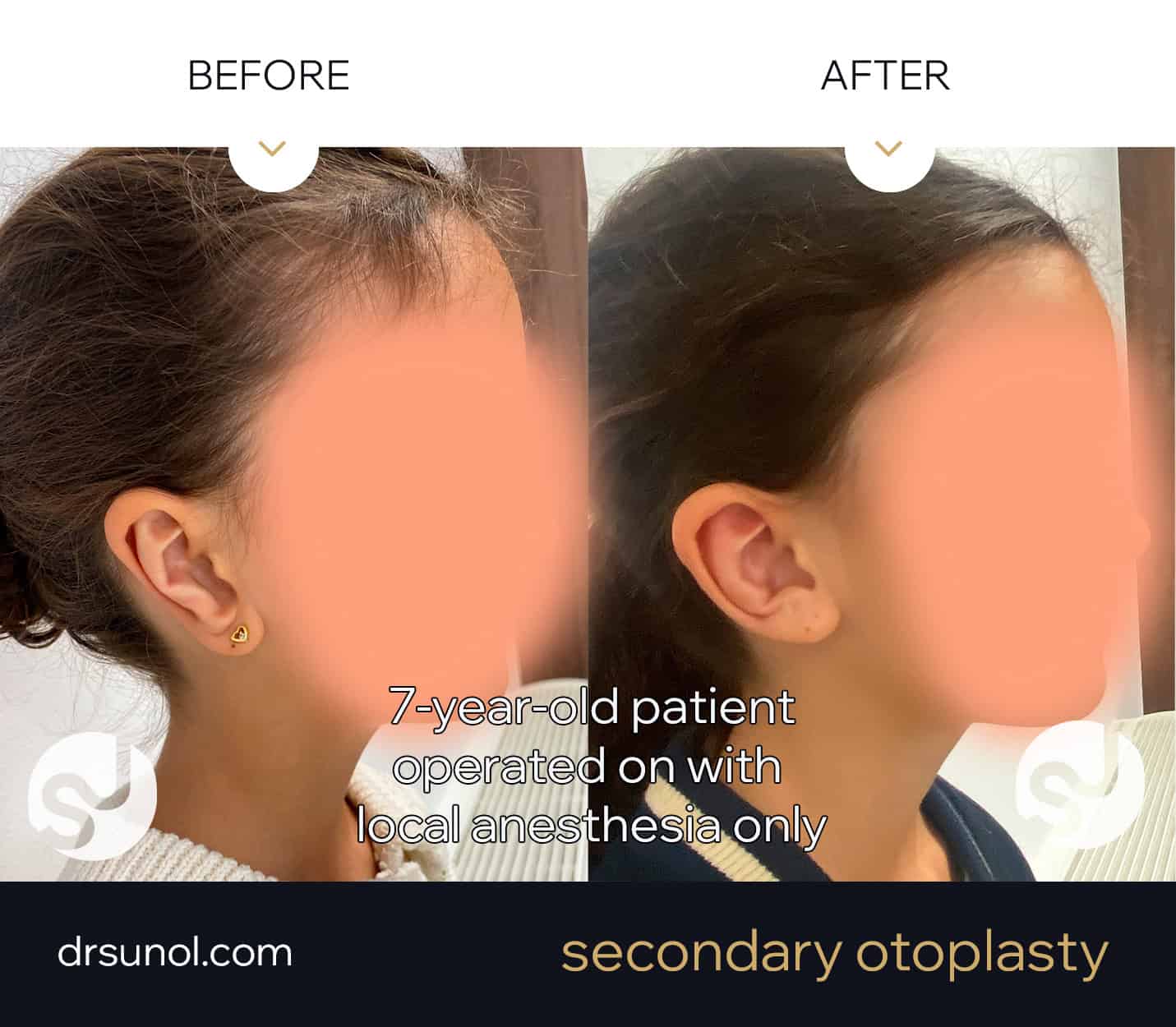
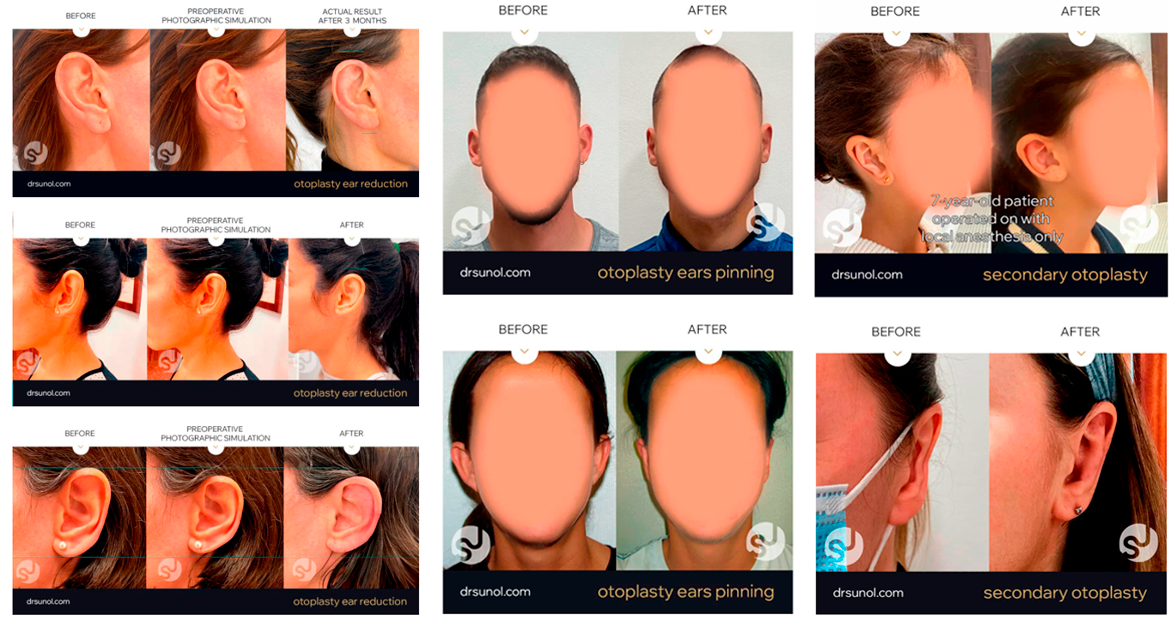
Otoplasty before and after

Preoperative
Recent blood analysis (less than 6 months).
Do not take medications that alter coagulation.
It is not necessary to come fasting.
Anesthesia
Local anesthesia (without sedation) in a quiet environment.
Personally carried out by Dr. Joaquim Suñol.
Completely painless.

Duration
Ears separated: 1.5 hours.
Ear reduction: 2 hours.
Different ears: From 1 to 3 hours.
Secondary otoplasty: 1 to 3 hours.
Care after otoplasty
- Prophylactic antibiotic: 3 days (Azithromycin 1 tablet of 500mg/day).
- Analgesia: Paracetamol 1g/6h if there is pain.
- Do not wet wounds: 2 days.
- No smoking: 7 days.
- Apply 96º alcohol to the wounds after showering.
- Elastic band 24 hours/day during the first week (it can be removed a few hours a day).
- Elastic band to sleep during the second week.
- Resorbable sutures fall off on their own after 10-15 days (it is not necessary to return to the office to remove them).

Recovery
Although it depends on each patient, generalizing:
- In the first two days, swelling and bruising appear.
- From the third day onwards the ears become less swollen.
- After a week there are still traces of inflammation and bruises, which will progressively resolve as the days go by.
- Avoid baths and swimming pools for 2-3 weeks.
- Avoid physical activity for 1-2 months.
- Avoid physical activity for 1-2 months.
- Avoid contact sports for 8 months.
- Apply sun protection on scars during the first summer.
Otoplasty price
The price of an otoplasty includes the surgeon’s fees, assistants and clinic expenses (outpatient operating room, materials and anesthetics). Depending on the complexity of each case, the price of ear surgery can vary: a secondary or reduction otoplasty usually has a higher cost than a primary otoplasty, and a reconstruction of torn earlobes has a lower cost.
Questions about otoplasty or ear surgery

Make an appointment with Dr. Suñol
